
Color: Red
Saperavi
Saperavi lands with depth and grip; its name is often rendered as "that which dyes," and this old variety still stands as Georgia's signature red grape.

The narrative of Georgian viticulture is not merely a study of agricultural production but a profound exploration of a nation’s soul. To understand the wine of Georgia is to understand the history, the land, and the people who have lived there for thousands of years. Often referred to as the "Cradle of Wine," the nation of Georgia boasts a continuous winemaking tradition that dates back at least 8,000 years. This deep historical connection is supported by archaeological evidence, such as the discovery of ancient clay jars containing residual wine compounds in Neolithic settlements like Gadachrili Gora, dating back to 6000 BCE. For the modern traveler, a wine tour in Georgia offers more than just a tasting; it provides an immersive journey into a culture where the vine is a symbol of life, resilience, and identity.

The foundation of Georgia’s unique position in the global wine community rests upon its traditional production methods, most notably the use of the Qvevri. These are large, egg-shaped earthenware vessels used for the fermentation, maturation, and storage of wine. Unlike the wooden barrels or stainless steel tanks common in modern European winemaking, the Qvevri is buried in the earth up to its neck. This practice is not merely aesthetic; the earth serves as a natural insulator, maintaining a constant, cool temperature that allows the wine to ferment slowly and naturally.
The cultural significance of this method is so profound that in 2013, UNESCO inscribed the ancient Georgian traditional Qvevri winemaking method onto the Representative List of the Intangible Cultural Heritage of Humanity. This recognition highlights that the tradition is a living heritage, passed down through generations in village communities across the country. For a family in rural Georgia, the marani, or wine cellar, is considered the most sacred part of the home. It is here that the family’s history is liquid, stored in buried vessels that may have been in use for over a century.
The technical process of Qvevri winemaking involves crushing the grapes and pouring the juice, along with the skins, stalks, and pips, collectively known as chacha, into the vessel. The mixture ferments for several weeks, after which the Qvevri is sealed and left for several months. This extended contact with the grape solids gives Georgian white wines their distinctive deep orange or amber hue and a complex, tannic structure that is often compared to red wine. This "amber wine" is perhaps Georgia's most famous contribution to the modern wine world, offering a sensory experience that is both ancient and entirely new to many international palates.
| Feature | Traditional Qvevri Method | Modern European Method |
|---|---|---|
| Fermentation Vessel | Buried clay Qvevri | Oak barrels or stainless steel tanks |
| Temperature Control | Natural earth insulation | Artificial refrigeration units |
| Skin Contact | Extended (3-6 months) for whites | Minimal or none for whites |
| Yeast Use | Natural, indigenous yeasts | Often added commercial yeasts |
| Flavor Profile | Complex, tannic, oxidative | Fresh, fruity, reductive |
Georgia's diverse topography, ranging from the high peaks of the Caucasus Mountains to the humid Black Sea coast, has created a mosaic of micro climates and soil types. This environmental variety supports over 500 indigenous grape varieties, though only about 40 are currently used for commercial production. Each region has developed its own specific identity, making a multi-region tour essential for any serious wine enthusiast.
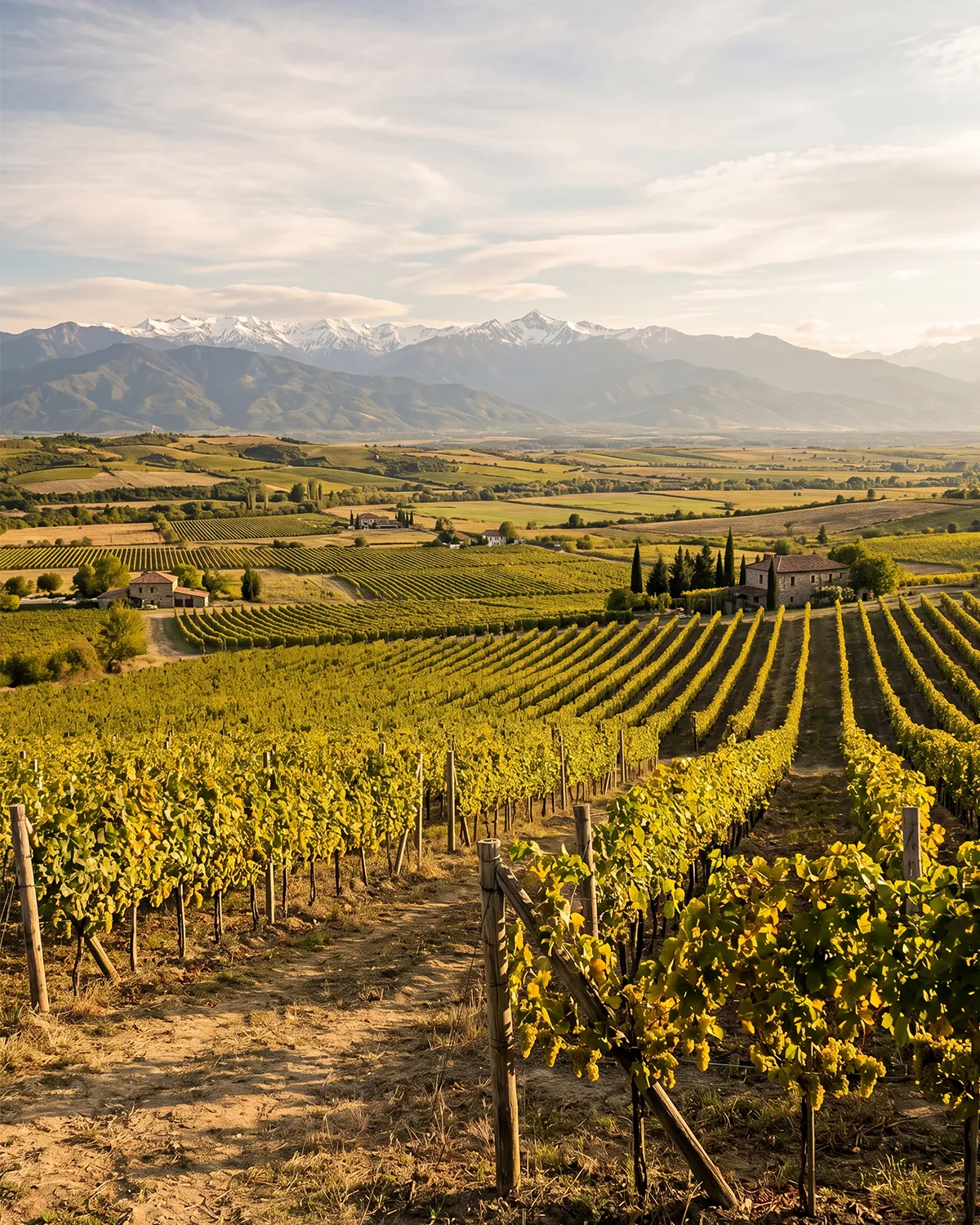
"Kakheti tastes of warm valleys, ripe fruit, and the slow, earthy calm of qvevri."
Color: Red
Saperavi lands with depth and grip; its name is often rendered as "that which dyes," and this old variety still stands as Georgia's signature red grape.
Color: White / Amber
Rkatsiteli starts taut and bright; it is Georgia's leading white grape and the backbone of countless Kakhetian wines, from crisp dry styles to amber qvevri bottlings.
Color: White
Kakhuri Mtsvane feels the most lifted in the set; in Kakheti it is often paired with Rkatsiteli to lend extra perfume and softness to white wines.
Color: White / Amber
Kisi opens gently in the glass, moving from ripe generosity on the nose to quiet spice and a rounded texture.
Color: White / Amber
Khikhvi balances ripeness with restraint, carrying a broad, almost creamy palate while finishing neat, lifted, and calm.
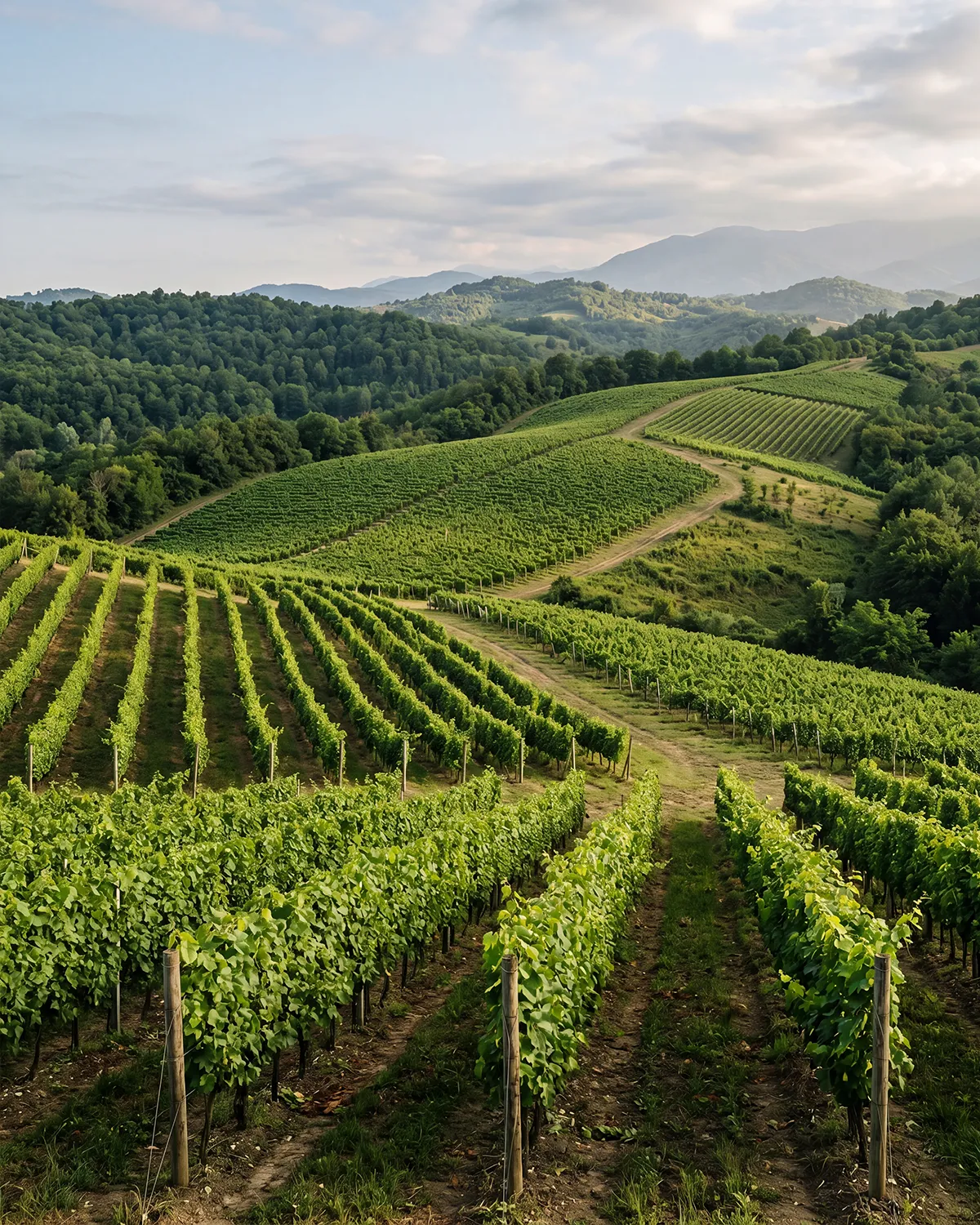
"In Imereti, the wines feel lighter on their feet, with limestone freshness and a clean, lifted aroma."
Color: White
Tsolikouri feels clean and linear; together with Tsitska and Krakhuna it forms the classic Imeretian wine Sviri.
Color: White
Tsitska runs on energy and bright acidity, which is why it became one of the three classic grapes of Sviri.
Color: White
Krakhuna is broader and more serious than its white peers; together with Tsitska and Tsolikouri it belongs to the classic Imeretian wine Sviri.
Color: Red
Otskhanuri Sapere is built around structure; it now even has its own PDO, Sazanos Otskhanuri, underscoring its stature in Imereti.
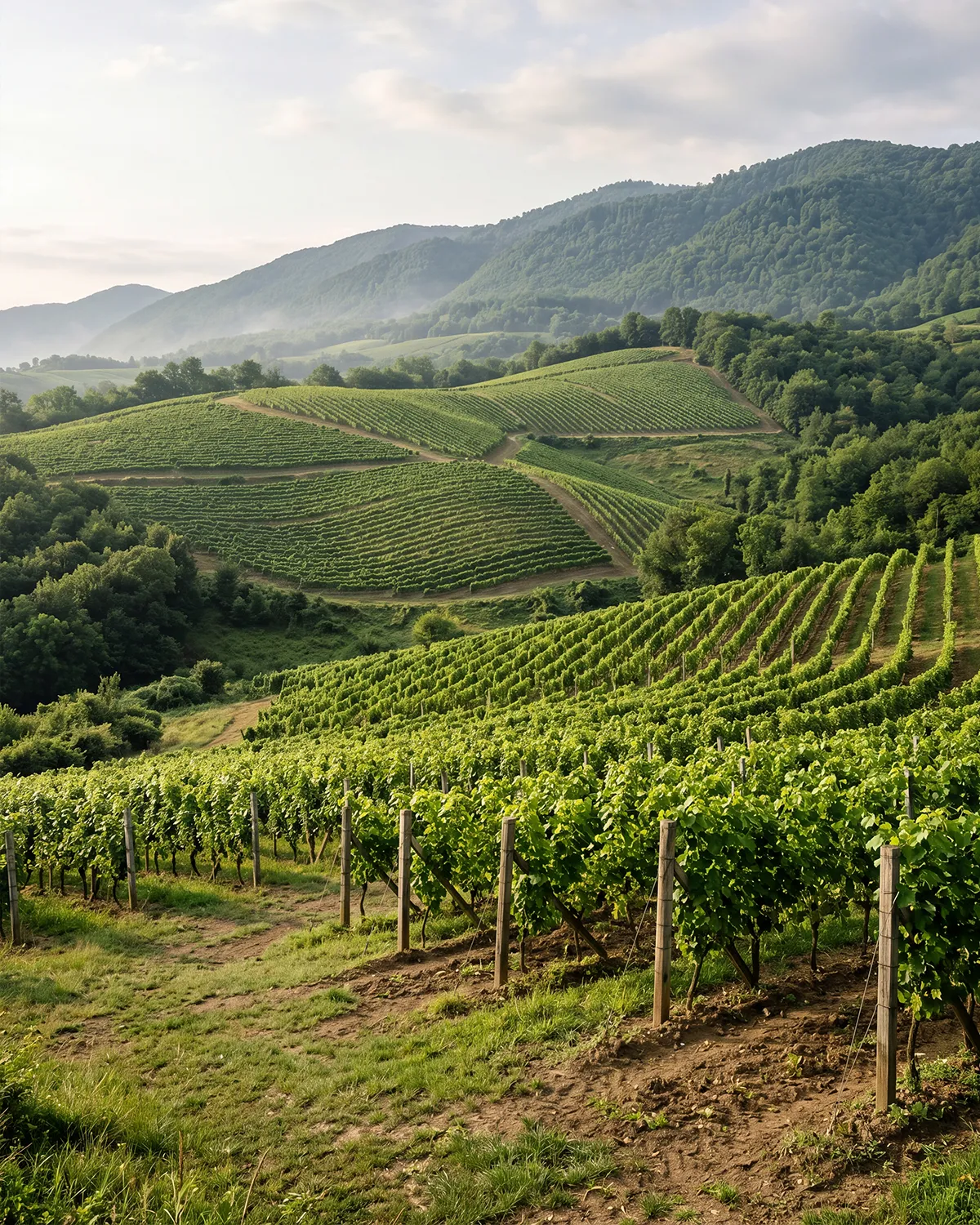
"Kartli keeps its wines taut and lively, with mountain wind, herbs, and a sharp mineral edge."
Color: White
Chinuri feels cool and tightly drawn; it is the backbone of Atenuri, Georgia's only PDO devoted to sparkling wine.
Color: White
Goruli Mtsvane is softer and more aromatic than Chinuri; together they shape the classic Kartli profile of Atenuri.
Color: Red
Tavkveri delivers fragrance without weight; historically it has been one of Kartli's most versatile red grapes, used for still red, rose, and even sparkling wines.
Color: Red
Shavkapito feels darker and more grounded, with springy texture and a cool woodland impression in the finish.
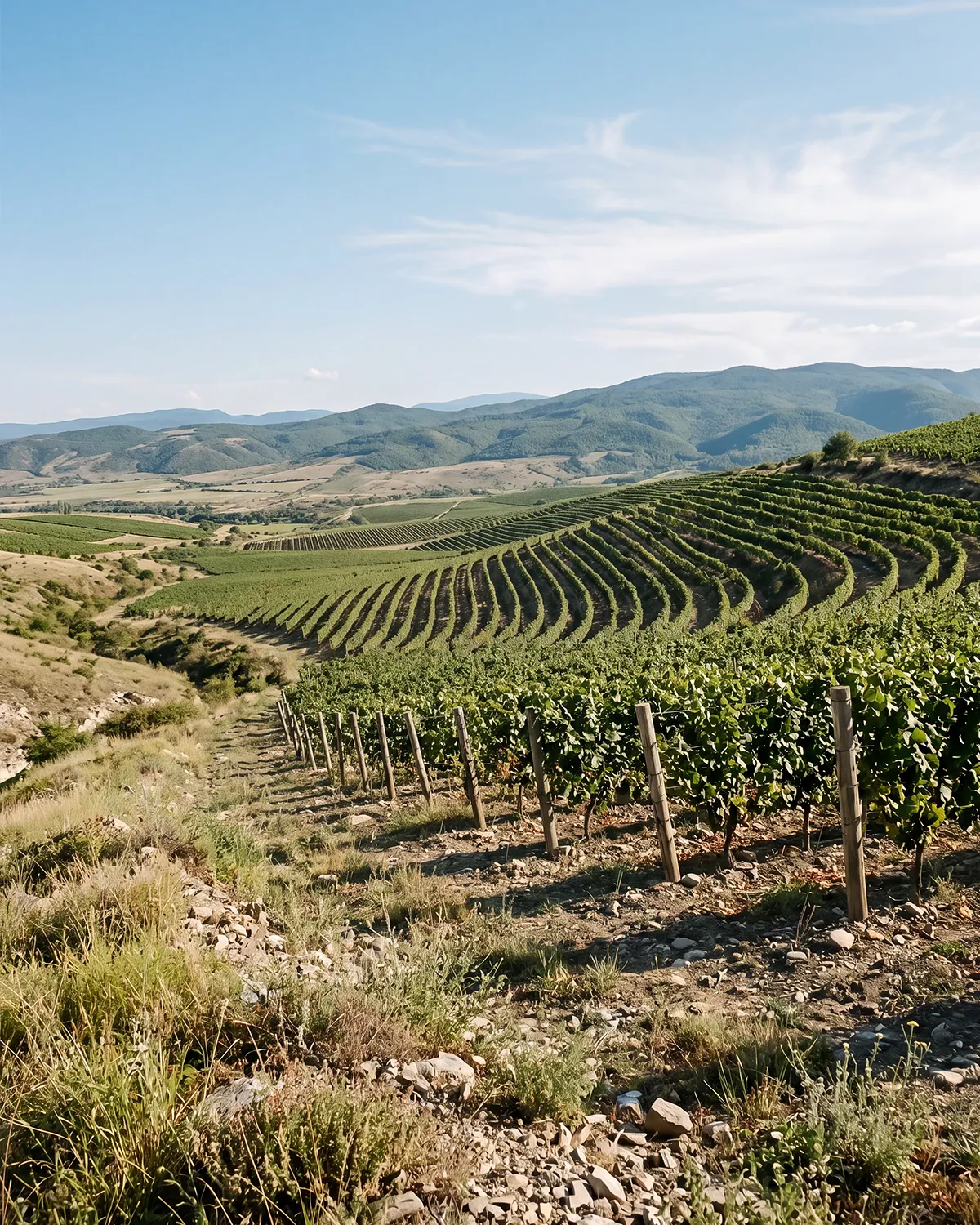
"Racha brings mountain finesse, where cool air turns red grapes fragrant, delicate, and quietly intense."
Color: Red
Aleksandrouli is especially charming and silky; together with Mujuretuli it forms Khvanchkara, the Racha semi-sweet that Stalin helped revive and served at the Tehran Conference in 1944.
Color: Red
Mujuretuli feels brighter and more direct.
Color: Red
Usakhelouri is delicate, rare, and precise; today its singular status is underscored by the dedicated Okureshi Usakhelouri PDO in Lechkhumi.
Color: White
Rachuli Tetra rounds out the palate gently and stays calm in tone, making it a natural match for light dishes and soft cheeses.
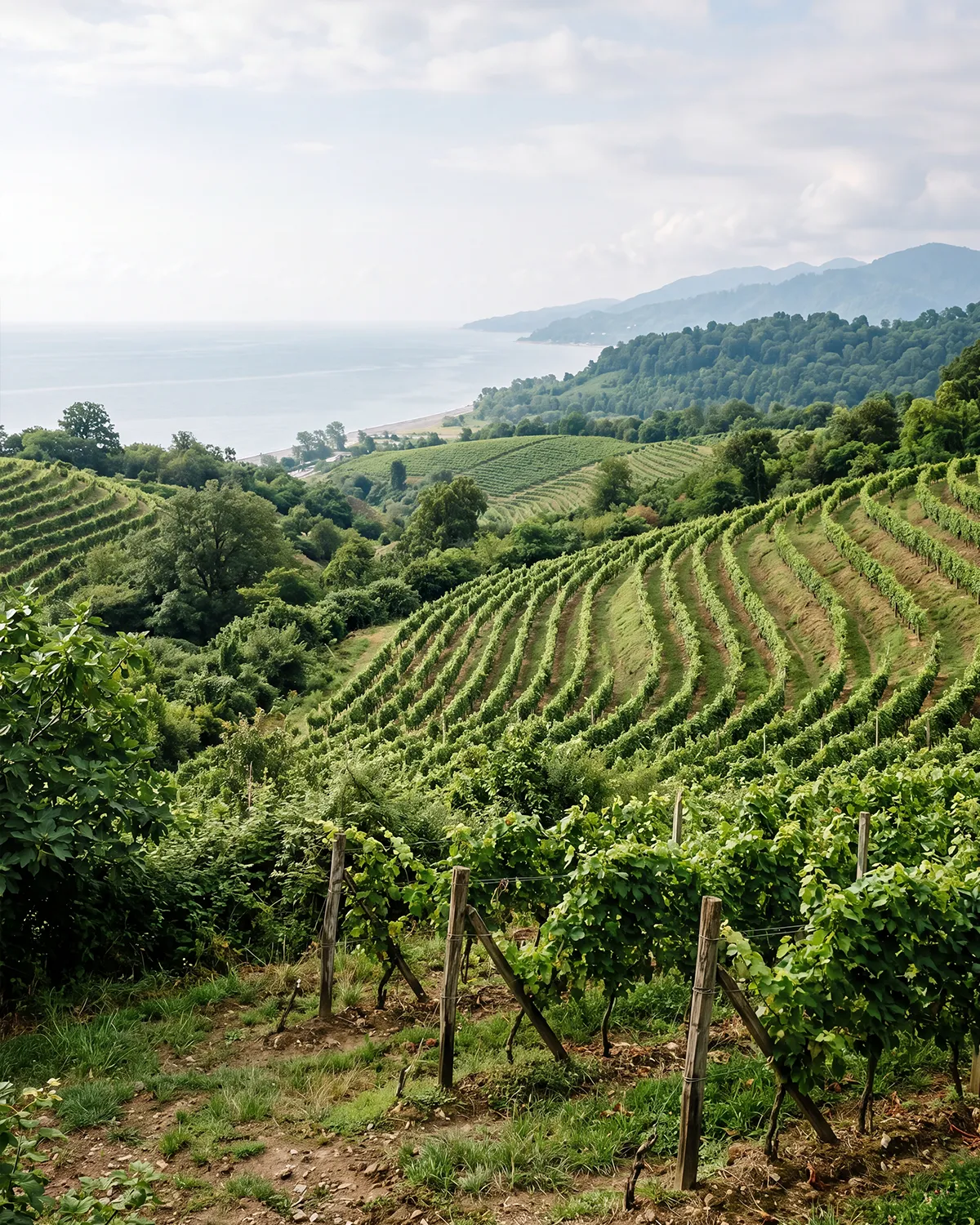
"Along the coast, the grapes pick up sea breeze and soft salt, opening into floral, spicy aromas."
Color: Red
Ojaleshi likes time and air; in Salkhino its story is tied to the vineyards of Prince Achille Murat, whose Ojaleshi wines earned medals at international exhibitions.
Color: Rose / Amber
Chkhaveri feels like the most versatile grape in the set; it is one of western Georgia's historic coastal grapes and shines in both rose and amber styles.
Color: White
Chvitiluri is all about clarity and ease, leaving a cool, lightly saline impression of sea air.
Color: Red
Satsuravi drinks easily and without edges, with a gentle palate and an approachable everyday character.
Kakheti, located in eastern Georgia, is the country’s main wine-producing region and a true mecca for wine tourism. It’s no surprise that tour descriptions often refer to it as «the renowned region producing the finest wines in the post-Soviet space», producing approximately 70% to 80% of the nation’s total output. The region is defined by the Alazani and Iori river valleys, which provide fertile, alluvial soils and a continental climate ideal for high-quality viticulture. Scattered throughout the valley are dozens of wineries and cellars (marani), many of which offer tours and tastings. For travelers starting their journey in Tbilisi, Kakheti is the most accessible and developed region for tourism.
The town of Sighnaghi, often called the "City of Love," serves as a popular base for exploring Kakheti. Perched on a hill overlooking the Alazani Valley, it offers stunning views of the Greater Caucasus Mountains. Popular spots include Pheasant’s Tears (famous for its organic Kakhetian wines) and Okro’s Winestasting room. Next, make your way to the Bodbe Monastery — a sacred site with a beautiful garden — and then continue on to Telavi, the region’s capital. This cozy town is surrounded by endless vineyards. Near Telavi, you’ll find many iconic wine destinations: the historic Chavchavadze estate in Tsinandali (with its lovely park and museum-like wine cellar), the Teliani Valley, winery, the Shumi Wine Factory and Wine Museum and the Alaverdi Monastery Marani, where monks produce wine using ancient recipes. The integration of religious history and viticulture is a common theme in Georgia, where monasteries have often served as centers for winemaking and the preservation of rare grape varieties.
From Signahi, take a side trip to Kvareli – the birthplace of the famous semi-sweet Kindzmarauli. Be sure to visit the Khareba Winery, known for its 7-kilometer wine tunnel carved into the mountainside, where tastings take place in cool, atmospheric underground halls. The Kakheti wine trail doesn’t end there — nearly every village (like Kisiskhevi, Napareuli, Vazisubani, and others) has family-owned wineries. Don’t hesitate to explore! If you see a sign or a roadside banner with the word Marani, stop by. Even if it looks like a regular house, just ring the bell — trust us, you won’t regret it!
Plan to spend 2–3 days to fully enjoy the region — tasting the wines and seeing the local sights (like the Gremi Fortress, Nekresi Monastery, and the 900-year-old plane tree in Telavi). Roads in Kakheti are generally in good condition, and the most scenic route is via the Gombori Pass, renovated in 2024. This winding road from Tbilisi to Telavi takes you through the mountains and offers breathtaking views all along the way.
The development of tourism in Kakheti has been catalyzed by the historical preservation of its medieval religious sites and the aesthetic appeal of hilltop towns like Sighnaghi. The integration of spiritual and viticultural life is evident at sites such as the Alaverdi Monastery, where 11th-century monks maintained vineyards as a form of divine labor. Modern Kakheti offers the most robust hospitality infrastructure in the country, ranging from large-scale international resorts to intimate family-run art hotels.
| Winery Name | Location | Budget Tier | Primary Appeal |
|---|---|---|---|
| Radisson Collection Tsinandali | Tsinandali | Luxury | Historical aristocratic estate; international service standards. |
| Babaneuris Marani | Babaneuri | Mid-Range/High | Foothills location; extensive active tourism options; organic focus. |
| Marani Elizbar 1918 | Kisiskhevi | Boutique/Mid | Artist-designed interiors; village community integration; high-quality traditional food. |
Located in the village of Kisiskhevi, less than 100 kilometers from Tbilisi, Marani Elizbar 1918 is an art hotel and winery that emphasizes a personalized, aesthetic connection to Georgian culture. The property features six uniquely designed rooms named after endemic grape varieties: Saperavi, Colikauri, Tsinandali, Chacha, Kisi, and Tvishi. David Turkestanishvili, the proprietor and an enthusiast of art and architecture, designed the decor to reflect the spirit of Georgian wine, utilizing traditional materials and vintage furnishings. The estate offers a secluded swimming pool with Caucasus views, a sitting room with a fireplace, and a rooftop lounge for creative workshops. A stay here is categorized as a home outside home experience, where guests are integrated into the sustainable community of the village, contributing financially to local neighbors who supply the hotel’s kitchen with organic products.
Babaneuris Marani is situated at the foothills of the Greater Caucasus, managing 11 hectares of vineyards adjacent to the Babaneuri Protected Area. This 4-star boutique hotel features 13 ensuite bedrooms, including rooftop doubles and family suites with tower terraces. The facility is notable for its 18-meter heated open-air pool and its commitment to active tourism, offering hiking trails, horse riding to mountain hot springs, and cycling through the Alazani Valley. The winemaking practice here utilizes traditional qvevri fermentation for Saperavi, Mtsvane, Kisi, and Rkatsiteli, providing guests with a direct link to ancient techniques through guided cellar tours and seasonal grape-picking activities.
For the luxury traveler, the Tsinandali Estate offers a synthesis of Georgian history and global hospitality standards. Set on the historic estate of Prince Alexander Chavchavadze, the property provides access to a 19th-century palace, botanical gardens, and a historic wine cellar. Rated highly for its world-class service, the hotel features a rooftop infinity pool and a refined restaurant program that pairs estate-grown wines with modern Georgian cuisine. This stay is ideal for those who prioritize historical context without sacrificing international luxury amenities.
"Kakheti tastes of warm valleys, ripe fruit, and the slow, earthy calm of qvevri."
Color: Red
Saperavi lands with depth and grip; its name is often rendered as "that which dyes," and this old variety still stands as Georgia's signature red grape.
Color: White / Amber
Rkatsiteli starts taut and bright; it is Georgia's leading white grape and the backbone of countless Kakhetian wines, from crisp dry styles to amber qvevri bottlings.
Color: White
Kakhuri Mtsvane feels the most lifted in the set; in Kakheti it is often paired with Rkatsiteli to lend extra perfume and softness to white wines.
Color: White / Amber
Kisi opens gently in the glass, moving from ripe generosity on the nose to quiet spice and a rounded texture.
Color: White / Amber
Khikhvi balances ripeness with restraint, carrying a broad, almost creamy palate while finishing neat, lifted, and calm.
"In Imereti, the wines feel lighter on their feet, with limestone freshness and a clean, lifted aroma."
Color: White
Tsolikouri feels clean and linear; together with Tsitska and Krakhuna it forms the classic Imeretian wine Sviri.
Color: White
Tsitska runs on energy and bright acidity, which is why it became one of the three classic grapes of Sviri.
Color: White
Krakhuna is broader and more serious than its white peers; together with Tsitska and Tsolikouri it belongs to the classic Imeretian wine Sviri.
Color: Red
Otskhanuri Sapere is built around structure; it now even has its own PDO, Sazanos Otskhanuri, underscoring its stature in Imereti.
"Kartli keeps its wines taut and lively, with mountain wind, herbs, and a sharp mineral edge."
Color: White
Chinuri feels cool and tightly drawn; it is the backbone of Atenuri, Georgia's only PDO devoted to sparkling wine.
Color: White
Goruli Mtsvane is softer and more aromatic than Chinuri; together they shape the classic Kartli profile of Atenuri.
Color: Red
Tavkveri delivers fragrance without weight; historically it has been one of Kartli's most versatile red grapes, used for still red, rose, and even sparkling wines.
Color: Red
Shavkapito feels darker and more grounded, with springy texture and a cool woodland impression in the finish.
"Racha brings mountain finesse, where cool air turns red grapes fragrant, delicate, and quietly intense."
Color: Red
Aleksandrouli is especially charming and silky; together with Mujuretuli it forms Khvanchkara, the Racha semi-sweet that Stalin helped revive and served at the Tehran Conference in 1944.
Color: Red
Mujuretuli feels brighter and more direct.
Color: Red
Usakhelouri is delicate, rare, and precise; today its singular status is underscored by the dedicated Okureshi Usakhelouri PDO in Lechkhumi.
Color: White
Rachuli Tetra rounds out the palate gently and stays calm in tone, making it a natural match for light dishes and soft cheeses.
"Along the coast, the grapes pick up sea breeze and soft salt, opening into floral, spicy aromas."
Color: Red
Ojaleshi likes time and air; in Salkhino its story is tied to the vineyards of Prince Achille Murat, whose Ojaleshi wines earned medals at international exhibitions.
Color: Rose / Amber
Chkhaveri feels like the most versatile grape in the set; it is one of western Georgia's historic coastal grapes and shines in both rose and amber styles.
Color: White
Chvitiluri is all about clarity and ease, leaving a cool, lightly saline impression of sea air.
Color: Red
Satsuravi drinks easily and without edges, with a gentle palate and an approachable everyday character.
As one travels westward from the capital toward Kutaisi, the landscape becomes lusher and more humid. Imereti is Georgia's second-largest wine region and offers a distinct contrast to the heavy styles of Kakheti. The winemakers here typically use a modified version of the Qvevri method, known locally as the churi. Unlike the Kakhetian style, Imeretian wines are fermented with less skin contact, usually only about 5% to 30% of the chacha, and often without the grape stems.
This difference in technique produces wines that are lighter, fresher, and more acidic. For the visitor, Imereti provides a more grassroots, authentic experience. Small family estates like Baia’s Wine in the village of Obcha have gained international fame for their organic, natural winemaking. A visit to such a winery often includes a traditional lunch prepared by the family, providing a deep connection to the local culinary heritage.
| Property Name | Location | Budget Tier | Description |
|---|---|---|---|
| Chateau Vartsikhe | Vartsikhe | Luxury | 5-star experience; extensive wellness facilities; unique forest chalets. |
| Baia's Wine | Obcha | Mid-Range/Boutique | World-renowned family winery; farm-to-table cuisine; immersive organic culture. |
| Old Marani Hotel | Tskaltubo | Mid-Range/Budget | Historic building; tranquil garden setting; proximity to therapeutic springs. |
Founded by Baia Abuladze, a leading figure in the resurgence of Imeretian wine, Baia’s Wine in the village of Obcha offers an authentic guesthouse experience for up to 12 guests. The rooms are described as spacious, clean, and comfortable, but the primary draw is the family hospitality led by Tamar Gvaladze. The stay includes immersive tours of the vineyards and the traditional qvevri cellar, with tastings focusing on Tsitska, Tsolikouri, and Krakhuna varieties. The culinary program is highly acclaimed, with many visitors describing the family-prepared lunch and dinner as the best traditional food in Georgia, featuring locally sourced, home-cooked ingredients paired with the estate’s natural wines and Pet-Nats.
Chateau Vartsikhe is a 5-star resort located 21 miles from Kutaisi International Airport, offering a luxurious retreat in a regional park setting. The property features diverse accommodation types, including king rooms with mountain views and two-bedroom chalets located in a secluded wood area for maximum privacy. Wellness facilities are extensive, comprising an indoor and outdoor pool, sauna, steam room, and full spa services. For recreation, the chateau offers horse riding, fishing, tennis, and the unique service of Mini Cooper and Vespa rentals for exploring the surrounding Imeretian hills. The on-site restaurant, Vartsikhe Marani, serves local cuisine praised for its quality and presentation.
For travelers seeking a mid-range or budget-friendly option without sacrificing character, the Old Marani Hotel in Tskaltubo provides a comfortable and peaceful environment. The property features air-conditioned rooms with garden views and private balconies. Its location near the historic spa resort town of Tskaltubo makes it an ideal base for those wishing to combine oenotourism with wellness. The hotel is pet-friendly and maintains a high standard of cleanliness, offering a traditional restaurant and bar on-site.
"Kakheti tastes of warm valleys, ripe fruit, and the slow, earthy calm of qvevri."
Color: Red
Saperavi lands with depth and grip; its name is often rendered as "that which dyes," and this old variety still stands as Georgia's signature red grape.
Color: White / Amber
Rkatsiteli starts taut and bright; it is Georgia's leading white grape and the backbone of countless Kakhetian wines, from crisp dry styles to amber qvevri bottlings.
Color: White
Kakhuri Mtsvane feels the most lifted in the set; in Kakheti it is often paired with Rkatsiteli to lend extra perfume and softness to white wines.
Color: White / Amber
Kisi opens gently in the glass, moving from ripe generosity on the nose to quiet spice and a rounded texture.
Color: White / Amber
Khikhvi balances ripeness with restraint, carrying a broad, almost creamy palate while finishing neat, lifted, and calm.
"In Imereti, the wines feel lighter on their feet, with limestone freshness and a clean, lifted aroma."
Color: White
Tsolikouri feels clean and linear; together with Tsitska and Krakhuna it forms the classic Imeretian wine Sviri.
Color: White
Tsitska runs on energy and bright acidity, which is why it became one of the three classic grapes of Sviri.
Color: White
Krakhuna is broader and more serious than its white peers; together with Tsitska and Tsolikouri it belongs to the classic Imeretian wine Sviri.
Color: Red
Otskhanuri Sapere is built around structure; it now even has its own PDO, Sazanos Otskhanuri, underscoring its stature in Imereti.
"Kartli keeps its wines taut and lively, with mountain wind, herbs, and a sharp mineral edge."
Color: White
Chinuri feels cool and tightly drawn; it is the backbone of Atenuri, Georgia's only PDO devoted to sparkling wine.
Color: White
Goruli Mtsvane is softer and more aromatic than Chinuri; together they shape the classic Kartli profile of Atenuri.
Color: Red
Tavkveri delivers fragrance without weight; historically it has been one of Kartli's most versatile red grapes, used for still red, rose, and even sparkling wines.
Color: Red
Shavkapito feels darker and more grounded, with springy texture and a cool woodland impression in the finish.
"Racha brings mountain finesse, where cool air turns red grapes fragrant, delicate, and quietly intense."
Color: Red
Aleksandrouli is especially charming and silky; together with Mujuretuli it forms Khvanchkara, the Racha semi-sweet that Stalin helped revive and served at the Tehran Conference in 1944.
Color: Red
Mujuretuli feels brighter and more direct.
Color: Red
Usakhelouri is delicate, rare, and precise; today its singular status is underscored by the dedicated Okureshi Usakhelouri PDO in Lechkhumi.
Color: White
Rachuli Tetra rounds out the palate gently and stays calm in tone, making it a natural match for light dishes and soft cheeses.
"Along the coast, the grapes pick up sea breeze and soft salt, opening into floral, spicy aromas."
Color: Red
Ojaleshi likes time and air; in Salkhino its story is tied to the vineyards of Prince Achille Murat, whose Ojaleshi wines earned medals at international exhibitions.
Color: Rose / Amber
Chkhaveri feels like the most versatile grape in the set; it is one of western Georgia's historic coastal grapes and shines in both rose and amber styles.
Color: White
Chvitiluri is all about clarity and ease, leaving a cool, lightly saline impression of sea air.
Color: Red
Satsuravi drinks easily and without edges, with a gentle palate and an approachable everyday character.
The Kartli region, which surrounds Tbilisi, is a fascinating blend of historical tradition and modern innovation. Because of its proximity to the capital, it has been heavily influenced by European winemaking styles, yet it remains home to some of Georgia's most unique indigenous traditions. The region is particularly famous for its high-quality sparkling wines and crisp, elegant whites.
A great place to start is the suburb of Tbilisi – the village of Mukhrani near the ancient city of Mtskheta. Here you'll find the elegant Château Mukhrani – a restored royal estate with a winery. The château offers cellar and vineyard tours, premium wine tastings, and even gourmet masterclasses. After sampling local wines made from the Shavkapito or Kakhuri Mtsvane grape varieties, you can explore Mtskheta itself, home to the UNESCO-listed Svetitskhoveli Cathedral and Jvari Monastery.
Next, head west along the highway toward the town of Gori. Along the way, make a stop in the village of Ateni (just south of Gori), where red dry Atenauri wine is made from the Tavkveri grape in the scenic Ateni Gorge, one of Kartli's oldest winemaking centers. In Gori, you can combine a cultural experience, such as visiting the Stalin Museum or the ancient cave town of Uplistsikhe, with wine tasting at the small Goruli Vazi wine cellar.
One of the highlights of Kartli is the village of Bolnisi, which was founded in the 19th century by German settlers from Swabia. The town is now a growing center for boutique wineries like Barbale Wines, which focuses on natural production and the revival of local grapes.
Though Kartli wines are less known internationally, connoisseurs appreciate the excellent sparkling wines made from Chinuri grapes and the strong local spirits like chacha. This region is the closest wine destination to Tbilisi, making it perfect for a day trip along the route: Tbilisi – Mukhrani – Mtskheta – Gori – Uplistsikhe. The roads are in good condition (with a main highway), and with relatively few wineries, it's easy to pair tastings with cultural sightseeing.
| Property Name | Location | Budget Tier | Unique Feature |
|---|---|---|---|
| Hameau Mukhrani | Mukhrani | Luxury | Serene spa retreat; adjacent to the royal palace and winery. |
| Iago's Winery Guesthouse | Chardakhi | Mid-Range/Boutique | First organic-certified winery in Georgia; personalized educational tours. |
| Merebashvili Estate | Kaspi | Boutique/Boutique | Centrally located family winery; focus on rare and extinct grape varieties. |
Located in the village of Chardakhi, only 20 minutes from Tbilisi, Iago’s Winery is an essential destination for students of natural winemaking. This was the first winery in Georgia to receive Bio-Certification in 2005. The guesthouse offers comfortable, cozy rooms surrounded by vineyards and mountain views, providing an intimate family atmosphere. Guests can participate in a personal tour led by Iago Bitarishvili, which includes an introduction to the qvevri winemaking process, tastings of organic Chinuri wines, and traditional Georgian appetizers like family-made pesto and artisanal cheeses. The experience is highly regarded for its educational value and the warmth of Bitarishvili’s hospitality.
Situated in Kaspi, the Merebashvili Estate is a family winery and hotel that prioritizes the preservation of Shida Kartli’s viticultural heritage. Along with Chinuri and Tavkveri, the estate specializes in rare varieties such as Shavkapito and Goruli Mtsvane, grown in their organic vineyards in the Okami Valley. The hotel offers a charming environment where guests can enjoy food and wine pairings that reflect the regional spirit. Beyond winemaking, the estate features a small honey bee farm and offers culinary workshops focused on the diverse dishes of the Kartli region.
For travelers seeking a refined and peaceful escape, Hameau Mukhrani in Mtskheta offers an exceptional stay. Rated 10.0 for its serenity, this luxury retreat features high-quality design, a garden, and a shared lounge. It serves as a sophisticated alternative to staying in the capital, providing easy access to the historical sites of Mtskheta and the nearby Chateau Mukhrani winery, where guests can explore royal winemaking history and enjoy fine dining.
"Kakheti tastes of warm valleys, ripe fruit, and the slow, earthy calm of qvevri."
Color: Red
Saperavi lands with depth and grip; its name is often rendered as "that which dyes," and this old variety still stands as Georgia's signature red grape.
Color: White / Amber
Rkatsiteli starts taut and bright; it is Georgia's leading white grape and the backbone of countless Kakhetian wines, from crisp dry styles to amber qvevri bottlings.
Color: White
Kakhuri Mtsvane feels the most lifted in the set; in Kakheti it is often paired with Rkatsiteli to lend extra perfume and softness to white wines.
Color: White / Amber
Kisi opens gently in the glass, moving from ripe generosity on the nose to quiet spice and a rounded texture.
Color: White / Amber
Khikhvi balances ripeness with restraint, carrying a broad, almost creamy palate while finishing neat, lifted, and calm.
"In Imereti, the wines feel lighter on their feet, with limestone freshness and a clean, lifted aroma."
Color: White
Tsolikouri feels clean and linear; together with Tsitska and Krakhuna it forms the classic Imeretian wine Sviri.
Color: White
Tsitska runs on energy and bright acidity, which is why it became one of the three classic grapes of Sviri.
Color: White
Krakhuna is broader and more serious than its white peers; together with Tsitska and Tsolikouri it belongs to the classic Imeretian wine Sviri.
Color: Red
Otskhanuri Sapere is built around structure; it now even has its own PDO, Sazanos Otskhanuri, underscoring its stature in Imereti.
"Kartli keeps its wines taut and lively, with mountain wind, herbs, and a sharp mineral edge."
Color: White
Chinuri feels cool and tightly drawn; it is the backbone of Atenuri, Georgia's only PDO devoted to sparkling wine.
Color: White
Goruli Mtsvane is softer and more aromatic than Chinuri; together they shape the classic Kartli profile of Atenuri.
Color: Red
Tavkveri delivers fragrance without weight; historically it has been one of Kartli's most versatile red grapes, used for still red, rose, and even sparkling wines.
Color: Red
Shavkapito feels darker and more grounded, with springy texture and a cool woodland impression in the finish.
"Racha brings mountain finesse, where cool air turns red grapes fragrant, delicate, and quietly intense."
Color: Red
Aleksandrouli is especially charming and silky; together with Mujuretuli it forms Khvanchkara, the Racha semi-sweet that Stalin helped revive and served at the Tehran Conference in 1944.
Color: Red
Mujuretuli feels brighter and more direct.
Color: Red
Usakhelouri is delicate, rare, and precise; today its singular status is underscored by the dedicated Okureshi Usakhelouri PDO in Lechkhumi.
Color: White
Rachuli Tetra rounds out the palate gently and stays calm in tone, making it a natural match for light dishes and soft cheeses.
"Along the coast, the grapes pick up sea breeze and soft salt, opening into floral, spicy aromas."
Color: Red
Ojaleshi likes time and air; in Salkhino its story is tied to the vineyards of Prince Achille Murat, whose Ojaleshi wines earned medals at international exhibitions.
Color: Rose / Amber
Chkhaveri feels like the most versatile grape in the set; it is one of western Georgia's historic coastal grapes and shines in both rose and amber styles.
Color: White
Chvitiluri is all about clarity and ease, leaving a cool, lightly saline impression of sea air.
Color: Red
Satsuravi drinks easily and without edges, with a gentle palate and an approachable everyday character.
The mountainous region of Racha-Lechkhumi is one of Georgia's most remote and beautiful wine-growing areas. Due to the rugged terrain and high altitude, production is limited, and the wines are often highly prized as rare gems. The region is most famous for its semi-sweet red wine, Khvanchkara, which is made from a blend of the Aleksandrouli and Mujuretuli grapes.
Khvanchkara is a Protected Designation of Origin (PDO) wine, produced in a specific microzone near the town of Ambrolauri. The unique climate, with its warm autumn days and cool nights, allows the grapes to accumulate high sugar levels while maintaining refreshing acidity. Another rare variety from this region is Usakhelouri, whose name translates to "nameless". Grown on steep, sun-drenched slopes, it produces a concentrated, aromatically complex red wine that is among the most expensive in Georgia.
The drive to Racha takes you through mountain passes and gorges, with breathtaking views, but you’ll need to stay alert behind the wheel. Plan for at least two days: one for the scenic drive from Kutaisi and sightseeing (like the historic Nikortsminda Church and Lake Shaori), and another for wine tasting in the Ambrolauri area. Western Georgian hospitality rivals that of Kakheti, so be ready for generous meals and plenty of toasts!
| Property Name | Location | Budget Tier | Primary Attraction |
|---|---|---|---|
| Wine Space | Sadmeli | Boutique/Mid | Restoration of a 100-year-old villa; luxury glamping domes; forest views. |
| Lomtadze Family Wine Hotel | Khvanchkara | Mid-Range/Boutique | Authentic family winery; vineyard views; focus on the Khvanchkara PDO. |
| Chateau Dio | Dzirageuli | Budget/Mid | Traditional guesthouse with historic cellar access; village location. |
Located in the village of Sadmeli, Wine Space is a unique combination of a boutique hotel and glamping facility. The property centers on a 100-year-old building that has been renovated with a sophisticated modern design, offering three distinct room types (Classic, Standard, and Lux) alongside 40-square-meter glamping domes. Each unit features a private bathroom and a panoramic terrace with forest and vineyard views. The site includes a century-old open cellar where guests can sample wines made from local ingredients, providing a high-end, calm environment for slow travel enthusiasts.
Managed by Tariel Lomtadze, this family-owned winery and guesthouse in the village of Khvanchkara manages one hectare of vineyard dedicated to Aleksandrouli, Mujuretuli, and other regional varieties. The property offers deluxe triple rooms with air-conditioning, private bathrooms, and balconies providing mountain and vineyard views. Rated 9.7 by guests, the hotel is praised for its cleanliness, staff hospitality, and the quality of its home-produced qvevri and classic wines, which are available for purchase on-site. The stay includes access to a shared kitchen, barbecue facilities, and bicycle rentals for exploring the high-altitude valleys.
"Kakheti tastes of warm valleys, ripe fruit, and the slow, earthy calm of qvevri."
Color: Red
Saperavi lands with depth and grip; its name is often rendered as "that which dyes," and this old variety still stands as Georgia's signature red grape.
Color: White / Amber
Rkatsiteli starts taut and bright; it is Georgia's leading white grape and the backbone of countless Kakhetian wines, from crisp dry styles to amber qvevri bottlings.
Color: White
Kakhuri Mtsvane feels the most lifted in the set; in Kakheti it is often paired with Rkatsiteli to lend extra perfume and softness to white wines.
Color: White / Amber
Kisi opens gently in the glass, moving from ripe generosity on the nose to quiet spice and a rounded texture.
Color: White / Amber
Khikhvi balances ripeness with restraint, carrying a broad, almost creamy palate while finishing neat, lifted, and calm.
"In Imereti, the wines feel lighter on their feet, with limestone freshness and a clean, lifted aroma."
Color: White
Tsolikouri feels clean and linear; together with Tsitska and Krakhuna it forms the classic Imeretian wine Sviri.
Color: White
Tsitska runs on energy and bright acidity, which is why it became one of the three classic grapes of Sviri.
Color: White
Krakhuna is broader and more serious than its white peers; together with Tsitska and Tsolikouri it belongs to the classic Imeretian wine Sviri.
Color: Red
Otskhanuri Sapere is built around structure; it now even has its own PDO, Sazanos Otskhanuri, underscoring its stature in Imereti.
"Kartli keeps its wines taut and lively, with mountain wind, herbs, and a sharp mineral edge."
Color: White
Chinuri feels cool and tightly drawn; it is the backbone of Atenuri, Georgia's only PDO devoted to sparkling wine.
Color: White
Goruli Mtsvane is softer and more aromatic than Chinuri; together they shape the classic Kartli profile of Atenuri.
Color: Red
Tavkveri delivers fragrance without weight; historically it has been one of Kartli's most versatile red grapes, used for still red, rose, and even sparkling wines.
Color: Red
Shavkapito feels darker and more grounded, with springy texture and a cool woodland impression in the finish.
"Racha brings mountain finesse, where cool air turns red grapes fragrant, delicate, and quietly intense."
Color: Red
Aleksandrouli is especially charming and silky; together with Mujuretuli it forms Khvanchkara, the Racha semi-sweet that Stalin helped revive and served at the Tehran Conference in 1944.
Color: Red
Mujuretuli feels brighter and more direct.
Color: Red
Usakhelouri is delicate, rare, and precise; today its singular status is underscored by the dedicated Okureshi Usakhelouri PDO in Lechkhumi.
Color: White
Rachuli Tetra rounds out the palate gently and stays calm in tone, making it a natural match for light dishes and soft cheeses.
"Along the coast, the grapes pick up sea breeze and soft salt, opening into floral, spicy aromas."
Color: Red
Ojaleshi likes time and air; in Salkhino its story is tied to the vineyards of Prince Achille Murat, whose Ojaleshi wines earned medals at international exhibitions.
Color: Rose / Amber
Chkhaveri feels like the most versatile grape in the set; it is one of western Georgia's historic coastal grapes and shines in both rose and amber styles.
Color: White
Chvitiluri is all about clarity and ease, leaving a cool, lightly saline impression of sea air.
Color: Red
Satsuravi drinks easily and without edges, with a gentle palate and an approachable everyday character.
The Black Sea coastal regions of Georgia represent a different world of viticulture, shaped by a humid, subtropical climate. Historically, these areas utilized the Maghlari method, where vines were trained to climb trees rather than growing on low trellises to protect the grapes from rot in the damp environment.
In Samegrelo, the Ojaleshi grape is the most famous variety. Harvested very late, sometimes as late as January, it produces deeply colored, spicy red wines.
The Black Sea region of Adjara is best known for its seaside resorts, but winemaking traditions are also making a comeback here. In the foothills surrounding Batumi, a unique pink grape variety called Chkhaveri is cultivated. It’s used to produce a delicate semi-sweet wine that’s unlike anything else in Georgia. If you're driving along the coast, it's worth taking a break from the beach for a day and heading into the mountains. On the road from Batumi toward the town of Keda, you’ll find the renowned Adjara Wine House—a winery estate where you can tour the vineyards, see antique wine presses, and taste rare local wines. Their pride and joy is Chkhaveri Rosé, available both as a dry and naturally semi-sweet wine under the “Porto-Franco” label, as well as qvevri-aged versions made using traditional clay vessels.
In addition to wine, guests are treated to traditional Adjarian specialties - like raw honey and sulguni cheese, that pair perfectly with the tasting experience. To round out your wine tour, consider a visit to nearby natural attractions such as the Makhuntseti Waterfall and the ancient arched Queen Tamar Bridge, both located close to the winery. You can also explore small private farms in the Acharistskali River Valley, where passionate locals grow Isabella grapes and craft homemade wines served in nearby restaurants. Back in Batumi, check out local wine bars and shops for a unique pairing of Adjarian wines with fresh seafood, it’s an unexpected but delightful culinary experience. While some mountain roads in Adjara can be narrow and winding, the main highway from Batumi to the wine house is in good condition and takes about 30 minutes to drive
| Property Name | Location | Budget Tier | Description |
|---|---|---|---|
| Menabde Winery | Shemokmedi | Boutique/Mid | Traditional oda house on a bio-farm; focus on Gurian ethnographic heritage. |
| Oda Family Marani | Martvili | Mid-Range/Boutique | Renowned for its culinary research; organic Ojaleshi production; family-run. |
| Shervashidze Marani | Keda | Boutique/Budget | High-altitude Adjara cottage; traditional culinary masterclasses. |
Located in the village of Shemokmedi, Menabde Winery is a boutique ethnographic hotel situated on a 3-hectare bio-farm. The accommodation is housed in a traditional Gurian oda and includes eight private rooms with modern amenities like air conditioning and free Wi-Fi. The stay is highly praised for its breakfast, made from local ingredients, and its peaceful garden setting. In the wine cellar, guests can taste wines made from Chkhaveri and Sakmiela grapes while learning about Gurian ethnographic traditions from the host family.
The Oda Family Marani in Martvili is housed in a wooden house built in 1933. Revitalized in 2016 by Keto Ninidze and Zaza Gagua, the winery focuses on organic Ojaleshi and other rare Megrelian and Abkhazian varieties. The estate is particularly famous for its family restaurant, which researches and reintroduces forgotten Megrelian dishes. Guests can enjoy an immersive cultural experience that combines high-quality natural winemaking with sophisticated regional gastronomy, making it a must-visit for serious food and wine enthusiasts.
Situated in the mountains of Keda, Shervashidze Marani offers a cottage-style stay with spectacular views of the Adjarian nature. The property manages 1.5 hectares of vineyards and produces organic wines including Chkhaveri, Tsolikouri, and Ojaleshi. The stay is known for its culinary masterclasses where guests can learn to prepare traditional Adjarian dishes. With a budget-friendly nightly rate ranging from ₾80 to ₾200, it provides an accessible yet professional introduction to the viticulture of Upper Adjara.

For the traveler planning an independent wine tour, reaching the best wineries often involves navigating remote villages, winding mountain roads, and rural backroads where public transport is either limited or impractical. Many of Georgia’s most memorable wine experiences are found far beyond the main towns, in small family-run cellars, hillside vineyards, and lesser-known villages that are difficult to access without private transport. While organized tours cover some well-known destinations, travelers who want flexibility and the chance to discover hidden producers on their own will quickly find that transportation plays a major role in shaping the overall experience.
The primary form of public transport in many parts of Georgia is the marshrutka, a shared minibus used for intercity and regional travel. Although it is affordable and widely used by locals, it is not especially convenient for wine tourism. Marshrutkas often depart only when enough passengers have gathered, so travelers cannot rely on precise departure times or build a detailed day plan around them. Routes are also designed for practical transport between towns rather than for sightseeing, which means they rarely stop at panoramic viewpoints, vineyard estates, or the small tucked-away family wineries that often provide the most personal and authentic tasting experiences. In addition, carrying bottles of wine, navigating multiple transfers, and trying to reach isolated wineries from the nearest village can make public transport a frustrating option for anyone hoping to explore the region at a comfortable pace.
While having your own wheels is one of the best way to see the Georgian countryside, there are some days where you might want to leave the car at the hotel and enjoy wine when exploring the "Cradle of Wine." To truly experience the 8,000-year-old qvevri tradition without paying for a designated non-drinkng driver, we trully recommend checking out Eat This! Tours. They do small-group and private experiences that go way beyond the standard tasting rooms of wineries. They’ll take you into family maranis (cellars) that are hard to find on Google Maps, offering a chance to meet the artisans making the clay vessels or even join the grape treading during Rtveli. It’s a great way to dive deep into Georgian hospitality while keeping your focus exactly where it belongs: on the wine and the stories.
Explore Food and Wine Tours with Eat This! Tours
Renting a car is widely considered the best way to explore Georgia’s wine regions independently. Having a vehicle gives travellers full control over their route, schedule, and stops, making it easy to combine well-known wineries with spontaneous detours to villages, monasteries, scenic overlooks, and local restaurants along the way. A rental car also provides a practical and secure place to store wine purchases throughout the day, which is especially useful for those planning to bring home several bottles. For most popular wine routes, including many roads in Kakheti, a standard sedan is usually sufficient. However, travelers heading into more remote areas such as Racha, where road conditions can be rougher and less predictable, should consider renting a AWD vehicle for greater safety and comfort. For anyone seeking a more flexible, immersive, and comfortable wine journey, renting a car offers a clear advantage.
Ready for your Georgian trip? Your Perfect Car Awaits.
We at OG Drive are a local service to rent a car in Tbilisi and Georgia, offering a wide range of vehicles, from city cars to AWD SUVs. Book online in minutes with transparent pricing, full insurance, and unlimited mileage. We offer free delivery to your hotel or airport and provide fast, personalized support.

COMPACT SUV
Hyundai Venue
Price starts at $31/day

Off Road Jeep
Subaru Crosstrek
Price starts at $46/day

SUV
Hyundai Tucson
Price starts at $48/day

EV
Tesla Model 3
Price starts at $51/day

Convertible
Ford Mustang
Price starts at $64/day
Zero Tolerance: Georgia has a strict zero-tolerance policy for drinking and driving.
Navigation: Use offline apps like Organic Maps for rural areas as Google Maps can suggest impassable routes.
The Gombori Pass: When driving from Tbilisi to Telavi, this pass offers breathtaking views.

No wine tour in Georgia is complete without experiencing the Supra, a traditional feast led by a Tamada, or toastmaster. The Tamada delivers meaningful toasts covering topics such as god, the homeland, and family.
The best time to visit is during the Rtveli, the annual grape harvest in September or October. Visitors can participate in picking grapes and traditional stomping. Travelers should also look for churchkhela, a traditional candy made from walnuts and grape juice, often called the "Georgian Snickers."
Saperavi pairs perfectly with Mtsvadi (grilled meat skewers) or Khinkali (meat dumplings).
Amber wines match rich dishes like Khachapuri (cheese bread) or Pkhali (vegetable pâté).
Tsolikouri is best with fresh salads, trout, or Chakapuli (lamb stew with tarragon).
A wine tour in Georgia is an odyssey where the boundaries between the ancient past and the present day are beautifully blurred. By choosing to explore by car, the traveler gains the freedom to discover hidden corners, the tiny village churches and the quiet family cellars. As the Georgians say, "A guest is a gift from God," and there is no better way to receive that gift than sharing a bottle of wine in the cradle of viticulture.
Book your car with best local car rental company!
Choose the best car
Идеальное время - это период Ртвели, ежегодного сбора винограда, который обычно проходит в сентябре и октябре. Во время Ртвели многие винодельни приглашают гостей поучаствовать в сборе винограда, его давке и праздничных застольях. При этом винодельни в Грузии принимают гостей круглый год, поэтому поездка вне сезона сбора урожая всё равно подарит отличный опыт дегустаций. Полноценный винный тур займёт минимум 14 дней, если вы хотите охватить несколько регионов. Только Кахетия заслуживает около 4 дней. Добавьте 2-3 дня на Картли, ещё 3 дня на Имерети и Кутаиси, и минимум 4 дня, если планируете поехать в Рачу или прибрежные регионы. Если времени мало, можно сосредоточиться на Кахетии и Картли - для насыщенного маршрута достаточно 3-4 дней. В каждом регионе есть разные варианты проживания, от уютных бутик-гостевых домов до роскошных отелей. В Кахетии популярные базы - Сигнахи и Цинандали. В Имерети стоит рассмотреть жильё рядом с Кутаиси или Цхалтубо. В Раче есть атмосферные горные гостевые дома в таких деревнях, как Хванчкара и Садмели. Многие винодельни также предоставляют возможно переночевать у них, поэтому вы сможете и поесть и продегустировать вино в одном месте. Мы настоятельно рекомендуем взять автомобиль. Общественный транспорт в сельской Грузии в основном представлен маршрутками, которые ходят по фиксированным маршрутам между городами. Они не останавливаются у виноделен, смотровых площадок или в удалённых деревнях, а расписание существует только для галочки. Арендованный автомобиль даёт полную свободу в планировании маршрута и времени, позволяет делать спонтанные остановки и удобно перевозить купленное вино в течение дня. Для основных винных регионов, включая Кахетию, вполне подойдёт обычный седан или компактный кроссовер - дороги там в целом хорошо асфальтированы. Однако если вы планируете поездки в более удалённые регионы, такие как Рача-Лечхуми, где дороги могут быть хуже и менее предсказуемыми, лучше выбрать автомобиль с полным приводом (AWD). В Грузии есть пять ключевых винодельческих регионов. Кахетия на востоке - самый крупный, на него приходится большая часть производства вина в стране. Имерети на западе известен более лёгкими и свежими белыми винами. Картли, расположенный вокруг Тбилиси, славится игристыми винами. Рача-Лечхуми в горах производит редкие и высоко ценимые полусладкие красные вина. Прибрежные регионы Самегрело, Гурия и Аджара дополняют картину уникальными сортами, сформированными под влиянием влажного климата Чёрного моря. Нет. В Грузии действует строгая политика нулевой терпимости к вождению в состоянии опьянения. Если вы планируете день дегустаций, заранее назначьте трезвого водителя, закажите автомобиль с водителем или организуйте дегустации так, чтобы пробовали вино только пассажиры, которые не за рулём. Да. Кахетия находится примерно в 1,5-2 часах езды от Тбилиси, а регион Картли ещё ближе, так как окружает столицу. Имерети и Кутаиси расположены в 3-4 часах к западу по основной трассе. До Рачи ехать дольше, дорога проходит через горные участки, но сама поездка очень живописная. Саперави, главное красное вино Грузии, отлично подходит к блюдам на гриле, таким как мцвади (шашлык) и хинкали. Янтарные (Amber) вина прекрасно сочетаются с насыщенными блюдами с сыром, например с хачапури, а также с овощным блюдом пхали. Более лёгкие белые вина из Имерети, такие как цоликоури, хорошо подходят к свежим салатам, речной форели или чакапули, ароматному рагу из ягнёнка с тархуном. Супра - это традиционное грузинское застолье, которое ведёт тамада (ведущий тостов). Он произносит красивые и содержательные тосты за семью, дружбу и родину. Это важная часть грузинской культуры. Многие семейные винодельни и гостевые дома включают ужин в стиле супры в программу дегустации, поэтому есть большая вероятность, что вы поучаствуете в таком застолье во время винного тура, особенно если посетите небольшие семейные винодельни (марани).
Ask a question
FAQ
Когда лучше всего ехать в Грузию на винодельни?
Сколько дней нужно, чтобы посетить все винные регионы Грузии?
Где лучше остановиться во время винного тура по Грузии?
Нужна ли машина для поездки по винодельням в Грузии?
Какой автомобиль лучше арендовать для винного тура по Грузии?
Какие основные винные регионы в Грузии?
Можно ли пить вино и водить в Грузии?
Легко ли доехать из Тбилиси в винные регионы?
Какие блюда хорошо сочетаются с грузинскими винами?
Что такое супра и смогу ли я попасть на неё во время винного тура?







We’ll bring the car to any address in the city or to the airport. Enter the address or your flight number.