What if one country could give you beach mornings, mountain air by afternoon, and a vineyard dinner by sunset—without ever feeling rushed? Summer in Georgia is exactly that kind of experience: a season where contrasts come together effortlessly, and every day can feel completely different from the last. From the humid, palm-lined Black Sea coast to the cool, snow-capped peaks of the Caucasus, the country transforms into a natural choose-your-own-adventure—inviting you to slow down, explore widely, and shape your trip around whatever kind of summer you’re in the mood for.
Key Takeaways
- Georgia in summer lets you easily combine beaches, mountains, forests, and wine regions in one trip.
- A car makes travel much easier, helping you reach remote nature spots and hidden locations.
- Different climate zones let you balance heat with cooler coastal, forest, and mountain areas.
- The best trips mix popular highlights with quieter stops and a slower pace in each region.
What makes summer in Georgia perfect?
Summer in Georgia is the season when the country’s contrasts are easiest to enjoy in one trip: humid, subtropical greenery along the Black Sea can feel surprisingly close to high mountain landscapes with snow‑capped peaks. That “close together” feeling is exactly why travelling to Georgia is so rewarding here: it turns the country into a choose‑your‑own‑adventure map, where you can switch settings: beach day, forest walk, mountain air, vineyard dinner without rebuilding your entire plan.
Summer is also the peak travel period. The country in summer is often “teeming with tourists,” which is both a challenge (popular places can feel busy) and an advantage (more services running, more open attractions, more lively atmosphere in resort areas). The practical takeaway is not “avoid summer,” but “design your itinerary wisely”: mix headline destinations with quieter nature stops, and alternate high‑energy cities with slower mountain or lake days so your trip feels spacious even in high season.
Climate is part of the summer story, too. The Black Sea coast is often described as warm, humid and pleasant in summer, while interior areas can be hotter, so it helps to think in terms of “zones”: coast and wetlands for sea breezes, forests for shade, and highlands as the natural air‑conditioning. This is one of the simplest ways to keep your holiday comfortable and varied without turning the article into a weather lecture.
Having a car makes Georgia’s “in‑between places” (villages, viewpoints, small museums, roadside farm cafés) easy to fold into your trip, especially in regions where highlights are spread out. Georgia’s tourism portal even frames car rental as the straightforward way to reach attractions outside the immediate city area (for example around Kutaisi and its natural sights). That freedom is the core promise of a summer road trip: Georgia’s best moments often happen between the famous pins on the map, and a car gives you the flexibility to follow your curiosity.
Black Sea summer destinations for beach days and subtropical forests

Georgia’s coastline is more than a single resort strip: it’s a whole summer “ecosystem” that combines city energy, beach villages, botanical gardens, and UNESCO‑recognised rainforests and wetlands in the wider coastal corridor. Instead of treating the coast as a quick swim stop, consider it a full chapter of the trip, especially if you like a mix of seaside downtime and nature escapes.
Batumi as a summer base with seaside atmosphere
If your ideal summer includes late evening walks, cafe terraces, and the option to dip into the sea whenever you feel like it, Batumi is the obvious anchor on the coast. The city’s best‑known summer “stage” is Batumi Boulevard - a palm lined promenade running along the coastline with cafes, bars and parks. In summer it becomes the easiest place to understand Batumi’s appeal: you can keep your day loose, and still feel like you’ve “done something” simply by being there.
For travellers who like to pair city time with quick cultural stops, Batumi also has modern landmarks (including the moving Ali & Nino Statue on the seafront) that are designed for exactly this kind of evening‑stroll sightseeing. Rather than planning Batumi hour‑by‑hour, the better summer tactic is to use the city as a flexible base: sleep in one place, then fan out to beaches and parks when you feel like a change of scene.
Coastal villages for swimming and a slower pace
If you want the coast without the full city buzz (also we must note that Batumi beach is not the best ever place to swim), Adjara has a string of summer‑friendly seaside villages that balance mountain views with the sea. Places like Gonio, Kvariati and Sarpi as relaxing options with sea scenery. Gonio is one of the fast‑developing coastal resort areas near Batumi, oriented toward a comfortable beach holiday with villas and family hotels.
Kvariati, in particular, is a small place bordered by Sarpi on one side and Gonio on the other, with a mix of small family accommodation and larger hotels - an easy cue that this coast is not “one size fits all.” For a summer road trip, these villages work well as either: a) a quieter overnight base than the city, or b) simple day trip beach choices that let you keep your main accommodation in Batumi.
Batumi Botanical Garden for a classic summer half‑day
One of the most satisfying warm‑weather pairings on the Georgian coast is “morning in the garden, afternoon by the sea.” Batumi’s botanical garden is repeatedly framed as a major attraction: it as a large site of around 108 hectares with diverse plants from around the world, offering a calmer, nature‑heavy break from city noise with coastal landscape rather than inland.
If you like travel experiences with a “collection” feel, moving through different plant zones and viewpoints, botanic garden stretching along the coast and organised into multiple parks and floristic sections, including a Colchic reserve element. In summer, this is an easy win: it’s outdoors, photogenic, and naturally paced (you set the speed).
The Colchic “green world”: rainforests and wetlands near the coast
A major reason the Georgian coast feels so lush in summer is the wider Colchic ecosystem corridor, recognised internationally through Colchic Rainforests and Wetlands, Georgia’s UNESCO‑listed natural World Heritage property. UNESCO describes this property as seven component parts along an approximately 80‑kilometre corridor on the humid eastern Black Sea coast, spanning altitudes from sea level to over 2,500 metres and featuring ancient deciduous rainforests and wetlands (including unique mire types).
For summer travellers, that description matters because it explains the “menu” of possible coastal nature days: you can choose dense forest, wetlands, rivers and lakes - without leaving the coastal region entirely. Two of the most road‑trip‑friendly examples are:
Mtirala National Park It's a forest‑covered and rich in Colchis flora, a part of the wider Colchic refugium story. The park rich in plant diversity, having relict and endemic species. You will find evergreen understorey that gives Colchic forests their dense, almost “rainforest” feel. Even if you’re not a botany person, Mtirala is a perfect summer reset: it’s about shade, greenery, and the feeling of being in a different climate zone after a beach day.
Kolkheti National Park If your summer dream includes being on the water, you can do different activities in this park: boat tours as a main visitor experience here, with options such as pontoon, kayak, or motorboat tours. There are also routes around Paliastomi Lake and the Pichori river mouth area, with wetland scenery and the park’s relict forests as part of the experience. This is a very different “coast day” from lying on the beach: it’s cooler, slower, and feels like entering a living landscape rather than a resort strip.
If you want a third layer of coastal nature, wetland plant communities and birdlife, Kobuleti National Park is a place for hiking and birdwatching, and it includes the internationally notable Ispani mire system - a percolating domed swamp nourished by rainwater. That makes it an especially good summer add‑on for travellers who want something that feels “rare” and ecological, not just scenic.
Our recommendaiton list
Restaurants: Khalagrand($), Adjarian wine house ($), Acharuli Khachaourian House ($), Panorama ($$$).
Hotels: Ibis Styles Batumi ($), Rooms Batumi($$), Le meredien($$$), Paragraph Resort&Spa ($$$).
Caucasus mountain escapes for cooler summer days

When the lowlands feel hot, Georgia’s mountain regions become the headline summer destination category - not as a niche “hiking holiday” choice, but as the country’s most natural way to rebalance your trip. The Greater Caucasus and related ranges create exactly the kind of variety that makes self‑drive travel so satisfying: one day you’re by the sea or in vineyards, the next you’re looking at glaciers and medieval towers.
Upper Svaneti for iconic mountain scenery and tower villages
If you search for “summer destinations in Georgia,” Svaneti is one of the places that comes up again and again - because it offers a rare combination of landscape and culture. Upper Svaneti is an exceptional example of mountain scenery with medieval‑type villages and distinctive tower‑houses, preserved in part by the region’s long isolation. We also must note Chazhashi (within the Ushguli community), which still contains more than 200 of these unusual structures.
For summer travellers, that matters because you’re not choosing between “pretty nature” and “interesting history.” In Svaneti, the landscape and the story are physically built together. Your photo stops are also cultural heritage stops; your quiet valleys are also living villages with a distinctive identity.
A key summer highlight here is Ushguli. It is one of the highest settlements in Europe, at around 2,200 metres above sea level, and a dramatic base for views toward the highest peaks of the Caucasus. It’s also explicitly framed as part of the UNESCO World Heritage environment - one reason it feels so “complete” as a summer destination rather than just a pretty stopover.
To make Svaneti work smoothly in summer, the most useful mindset is: choose a base, then explore in different directions. Many independent itineraries use Mestia as the easier base for museums, cafés, and day excursions, with Ushguli as either a major day trip or an overnight extension. (Whether you sleep in Mestia, Ushguli or both, having your own car is will help you to keep your schedule flexible - staying longer when the weather is stunning and moving on when you’re ready.)
Ready for your Georgian trip? Your Perfect Car Awaits.
We at OG Drive are a local service to rent a car in Tbilisi and Georgia, offering a wide range of vehicles, from city cars to AWD SUVs. Book online in minutes with transparent pricing, full insurance, and unlimited mileage. We offer free delivery to your hotel or airport and provide fast, personalized support.

COMPACT SUV
Hyundai Venue
Price starts at $31/day
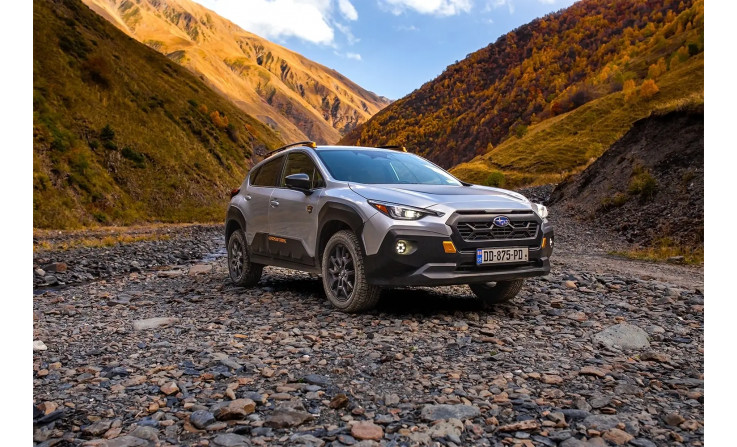
Off Road Jeep
Subaru Crosstrek
Price starts at $46/day
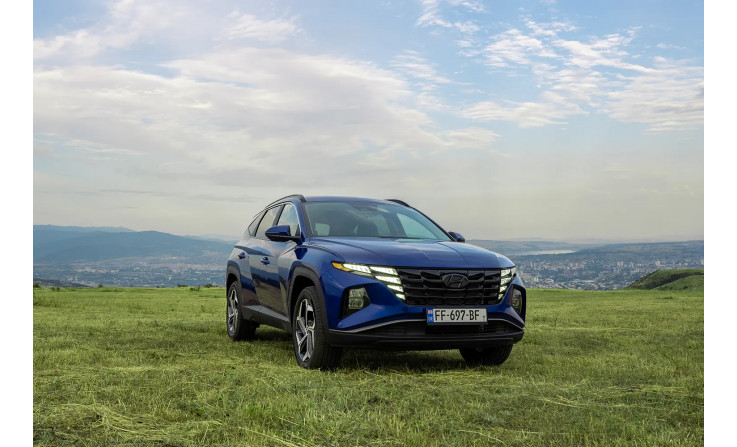
SUV
Hyundai Tucson
Price starts at $48/day

EV
Tesla Model 3
Price starts at $51/day
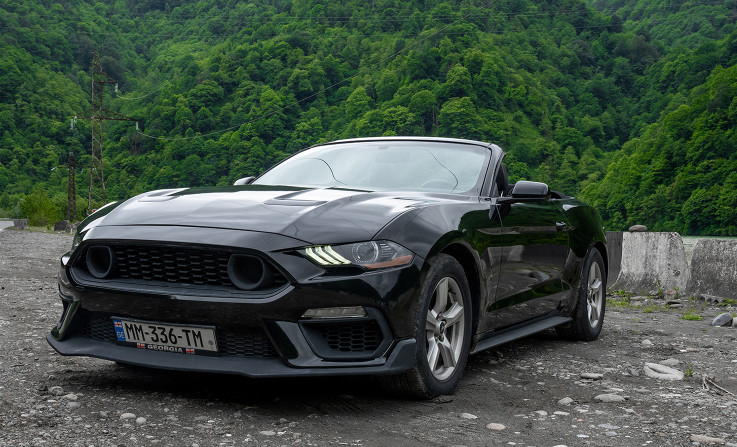
Convertible
Ford Mustang
Price starts at $64/day
Kazbegi National Park for alpine meadows and big‑mountain views
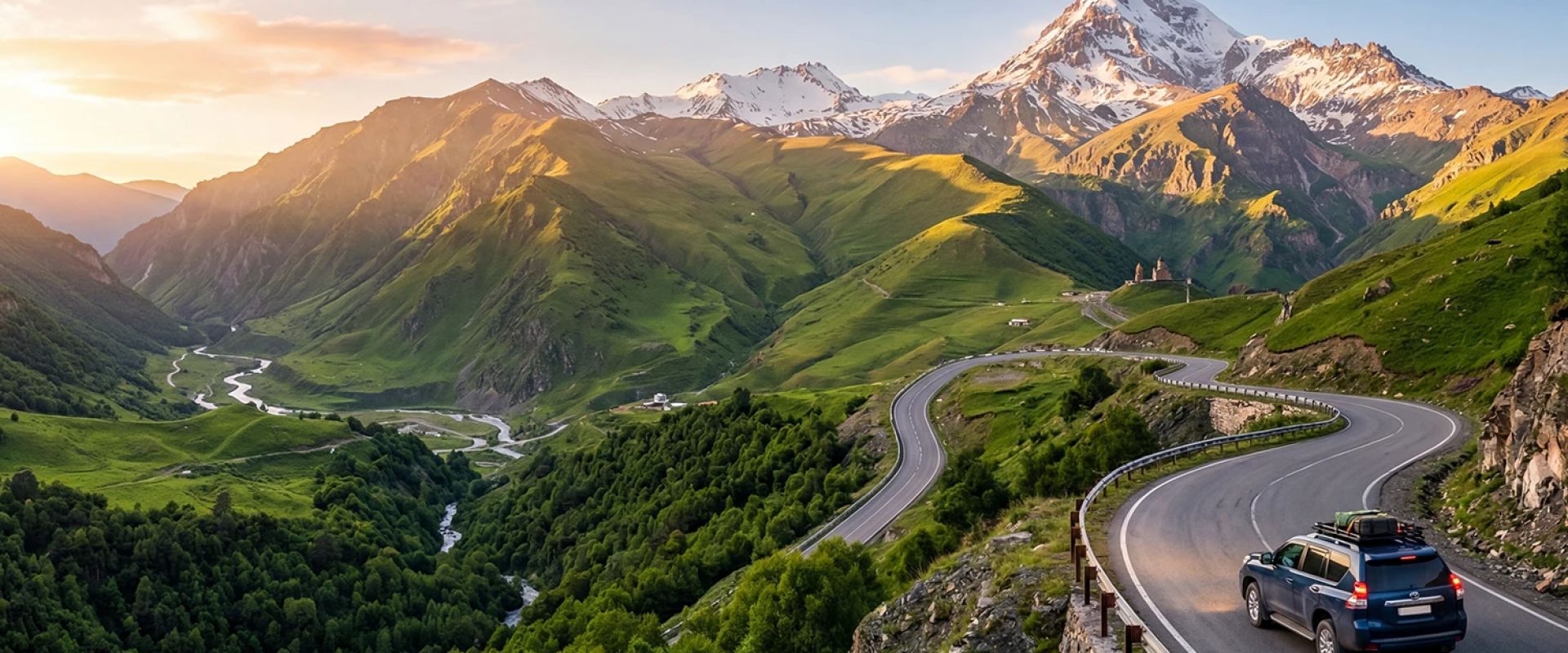
If Svaneti is Georgia’s tower‑village legend, Kazbegi is the high‑mountain postcard zone many people picture first, dominated by dramatic ridgelines and the cultural landmarks of the mountain valleys. Kazbegi National Park is a high‑altitude landscape (noting the park area around 1,400 metres above sea level) with alpine meadows, moraines and snowy peaks, and it positions the area as a popular destination for visitors. That “popular” label is useful in summer: it means the region is set up for travellers compared with more remote highlands.
The most recognisable cultural sight here is Gergeti Trinity Church. Georgia’s tourism portal describes the church as a must‑see monument, a 14th‑century site dramatically positioned against towering mountains. In summer, it becomes the kind of place you can pair with multiple “styles” of day: sunrise photography, a slow scenic afternoon, or as the cultural highlight after a nature walk.
For a road trip, Kazbegi also works well because it has a strong set of “add‑on valleys and villages” that deepen the region beyond the single famous viewpoint. The most notable Truso Valley is a place with mineral waters and travertine features, alongside glaciers in the wider ridge environment - exactly the kind of landscape variety that gives a summer mountain day more texture. Also Juta - is a high settlement point (noting roughly 2,200 metres) with views to the Chaukhi Mountains.
Kazbegi also stands out as one of Georgia’s most accessible hiking hubs, offering routes that range from gentle valley walks to some of the country’s most demanding alpine treks. Truso Valley is a perfect example of a scenic, relatively moderate hike: a long, open trail following the Terek River through mineral springs, abandoned villages, and striking travertine formations, with constant views of surrounding ridgelines. It’s the kind of hike where the journey matters more than the endpoint, and it can be adapted to different fitness levels. At the other extreme lies the Kelitsadi Lake trek, often considered one of the most difficult in Georgia. This high-altitude route crosses remote volcanic terrain and mountain passes above 3,000 metres, typically requiring at least two days, proper navigation skills, and stable weather. The reward is a stark, otherworldly landscape and a deep sense of isolation that contrasts sharply with the more visited parts of Kazbegi, making it a true adventure for experienced hikers.
Tusheti National Park for summer‑season highlands and a “remote Georgia” feel
Some parts of Georgia are a “summer destinations” because access to them is not possible during winter. Tusheti is one of the clearest examples, and that’s why it feels so special in a summer itinerary: you’re not just choosing the scenery; you’re choosing the season when that scenery is realistically approachable.
Tusheti is a “treasure” hidden in the Caucasus Mountains (its language is genuinely romantic) with an extensive network of trails across its protected areas. The tourist season lasts from June to October. That one line is the core reason Tusheti belongs in a summer‑focused Georgia article: it’s not the place you casually “save for later”; it’s the place summer unlocks.
Within Tusheti, travellers often talk about the distinctive settlement landscape - stone villages, strong local identity, and wide open valley views. Some trail highlights - places like Omalo and Dartlo, and many other small villages. Tusheti is not a single attraction but a whole highland environment of multiple villages and cultural points.
Because the region is remote, the best summer “road‑trip thinking” here is to treat Tusheti as a dedicated chapter rather than a quick add‑on between other stops. Give it time (at least 3-4 days), and it becomes the part of the trip that feels most different from anywhere else in the country. Be aware that not everybody allow rental cars to go there. You can either order a transfer, find an off-road car or have a helicopter ride there and back.
Racha-Lechkhumi and Kvemo Svaneti for lakes, forests and quieter highlands
If Svaneti and Kazbegi are the star names, Racha is often the “second discovery” travellers fall in love with - especially those who want mountain scenery with fewer crowds and a gentler pace. The region is rich in varied natural assets (mountain ranges, caves, rivers, waterfalls and lakes), positioning it as an adventure‑friendly landscape rather than a single‑site destination.
A classic summer highlight is Shaori Lake (often referred to as a reservoir). It's a largest reservoir in the region and places it at around 1,100–1,200 metres above sea level, with details about its dimensions and construction era. Whether or not you care about engineering stats, the important travel takeaway is simple: this is a highland lake setting that naturally suits summer - cooler air, big skies, and a landscape that’s meant for slow picnics, short walks and viewpoint stops.
Racha also contains towns that make strong bases for a few nights. Oni is a cosy town in the region and uses it as an anchor point in its sample touring content - useful as a clue that the area can be explored “hub‑and‑spoke” rather than as a single long push.
If you’re crafting a summer route with a car, Racha is one of the easiest ways to make the trip feel more personal: it’s well‑suited to travellers who prefer guesthouses, local food, nature‑first days and less nightlife. We suggest to combine it wish Svaneti region. You can make a ring trip Zugdidi -> Mestia -> Ushghuli -> Lagodekhi -> Kutaisi.
Borjomi and Bakuriani for resort‑style summer breathing space
Georgia’s “resort towns” aren’t only winter ski stations. In summer, some of them become gentle, family‑friendly retreats, more about forest walks, parks and wellness rhythms than adrenaline. Borjomi is framed by Georgia’s tourism portal as surrounded by smaller resort destinations (including Bakuriani) that offer recreation and treatments.
Bakuriani, meanwhile, is described by Georgia’s tourism portal by its elevation (around 1,700 metres above sea level) and its location within Borjomi municipality - an objective reason it can feel refreshing in summer compared with hotter lowlands. Being located between Tbilisi and Batumi, you can use this pair in a summer itinerary as the “soft landing” between bigger adventures: after long days in the mountains or intense city time, a resort‑style stop can recalibrate your energy without sacrificing scenery.
Our recommendaiton list
Restaurants: Mestia: Panorama, Sunset, Vichnashi, Erti Kava ($-$$).
Hotels: Sunset Terrace Mestia ($$), Rooms Hotel Stepatsminda and Rooms Kokhta, Borjomi ($$), Airbnb in Racha ($-$$), Samzeo Tusheti ($$).
Waterfalls, canyons and caves for a refreshing summer break

One of Georgia’s most summer‑friendly destination categories is “water landscapes”: canyons where temperatures drop, rivers where you’re constantly near shade, and caves where the air feels naturally cool. These are the places that make a July or August itinerary feel comfortable and adventurous in a single day - especially for families, mixed‑ability groups, or travellers who want nature without committing to multi‑day trekking.
Imereti as a summer nature hub
Western Georgia’s canyon‑and‑cave cluster works particularly well for car travellers because the attractions are spread out - and the joys come from combining them. Georgia’s tourism portal explicitly points to car hire as the practical way to reach sites “a little further afield” from Kutaisi, such as Prometheus Cave. That short statement captures the whole logic of this region as a self‑drive chapter: you’re not “doing one thing,” you’re curating a day (or several days) from a menu of natural wonders.
You should treat these attractions (canyons, caves, waterfalls) in a unified visitor framework rather than random unregulated stops.
Martvili Canyon for river views and a classic boat ride
Martvili Canyon is one of the most recognisable “cool‑down” destinations in summer because its signature experience is literally being on the river inside a canyon environment. Boat ride opportunity along a 300‑metre (one‑way) section of the Abasha river, is one of the main attraction of the canyon.
Even if you skip the boat element, this kind of landscape tends to deliver what summer travellers actually want: shade, flowing water, and photogenic viewpoints without needing expert skills or heavy equipment.
Okatse Canyon and Kinchkha Waterfall as a summer double feature
Okatse Canyon is often paired with a waterfall stop, visit includes: a trail with a pedestrian route and a 780‑metre hanging section, ending at a panoramic viewpoint. This is the kind of detail that matters for summer planning because it tells you the experience is designed (there is a defined route), not just “go into nature and hope it works out. Close by, Kinchkha Waterfall - triple‑stage cascade, with its location in the village of Kinchkha in Khoni municipality and its elevation above sea level.
Prometheus Cave for a naturally cool summer escape
Caves are the ultimate summer temperature hack, and Prometheus Cave is one of Georgia’s best‑known examples. It's 60–70 million years old and with the average air temperature inside as around 14°C - exactly the sort of “why this works in summer” detail that makes the destination easy to justify in an itinerary.
The route through the cave takes about an hour, passes through six halls, and ends with a boat tour on the underground river (the Kumistavi). In other words, this is not merely “look at stalactites.” It’s a full sensory sequence: walking, chambers, lighting, and the water exit element.
For a summer destination article, Prometheus Cave is valuable because it is accessible and family‑friendly in concept, while still feeling genuinely otherworldly. It’s also a strong solution for days when the weather is too hot for an exposed viewpoint or too humid for a long forest walk.
Wine country and heritage towns for long summer evenings

Summer in Georgia isn’t only about escaping heat; it’s also about embracing the rhythm of late light, long dinners, and the kind of social atmosphere that makes travel feel immersive. Georgia’s wine and heritage destinations shine here because they naturally extend into the evening - tastings, courtyard meals, fortress walks at golden hour, and small towns that feel romantic after the day‑trippers leave.
Kakheti as the flagship summer wine region
Kakheti is Georgia’s most famous wine region in the travel imagination, with it's symbols: the Alazani Valley, monasteries, varied landscapes, and most importantly - qvevri, the traditional vessel in which Georgian wine is made.
Kakheti’s cultural wine tradition is internationally recognised through UNESCO’s listing of the Ancient Georgian traditional Qvevri wine-making method on its Intangible Cultural Heritage list. This method could be described as pressing grapes and fermenting the juice with skins and other grape elements inside a qvevri vessel that is sealed and buried in the ground, with fermentation lasting months. Kakheti is more than “vineyards with tastings”: it’s a living craft culture embedded in everyday life and celebration.
In summer, the winemaking story pairs especially well with overnight stays: imagine slow mornings, a midday break, and then a late afternoon tasting that turns into dinner. Quite many wineries (marani) have a small hotels/guest houses where you can spend a night.
Sighnaghi for fortress walls, views and an easy summer romance vibe
Sighnaghi is one of Georgia’s most photogenic small towns, and there is a straightforward explanation of why: the town’s fortress walls are largely intact, wrapping around the settlement, with a total length described as around four kilometres, including multiple gates and towers. The restoration efforts in the modern era helped shape Sighnaghi’s “City of Love” identity and refreshed its tourism infrastructure.
For summer travellers, Sighnaghi works because it’s naturally walkable: cobblestone streets, balconies, viewpoints, and the feeling of being perched above the Alazani Valley. It’s also an easy place to design a low‑stress day: fortress stroll, museum or monastery nearby, then a long meal with local wine as the sun drops. The town invites that rhythm without requiring a complex plan.
Telavi for a more “local living” base in wine country
If Sighnaghi is the postcard romance, Telavi is often used as the practical cultural base of the region. It's the cultural centre of Kakheti, with a medieval past and a mix of historic and modern amenities. It's usually visited within a network of surrounding experiences, old sites, wine cellars, day trips: a hub where you can adapt your plans day by day.
For summer, Telavi is a good choice when you want wine country without feeling like you’re in a “set piece” town. It’s a place to build a real routine for a couple of night, morning coffee, midday exploration, evening courtyard dinners. And because Kakheti’s landscapes range from valley vineyards to more arid zones, having a stable base helps you explore that variety without packing up daily.
Davit Gareja for semi‑desert landscapes and cave monastery atmosphere
Georgia’s summer destinations are not only green. If you want a completely different palette: semi‑desert tones, stark ridgelines, cave‑cut monastic spaces - Davit Gareja is one of the most distinctive options near the eastern side of the country. The monastery complex is set in a semi‑desert landscape with caves carved into bare rock, located in Sagarejo municipality around 70 km east of the capital. It also attributes a “most beautiful and wild places” recognition to National Geographic, reinforcing that this is viewed as a standout landscape experience rather than a niche religious site.
Because it’s so visually different from the rest of Georgia, Davit Gareja functions well as a “contrast day” in a summer itinerary - especially if your trip otherwise leans toward mountains and forests. Add it as a deliberate change of mood: quieter, more minimal, more meditative.
UNESCO heritage close to the road‑trip “spine”
Beyond regions, Georgia’s summer road trips are often strengthened by adding one or two high‑impact heritage sites that don’t require a full cultural tour to appreciate. The UNESCO World Heritage list in Georgia includes cultural sites such as Historical Monuments of Mtskheta and Gelati Monastery, and the cultural landscape of Upper Svaneti already discussed - plus the natural Colchic Rainforests and Wetlands. The practical travel point is that UNESCO sites can act as “meaning anchors” between nature days: they give your itinerary narrative depth.
Mtskheta and Georgia’s early Christian architecture UNESCO describes the Historical Monuments of Mtskheta as a serial property including Jvari Monastery, Svetitskhoveli Cathedral and Samtavro Monastery - representing development of religious architecture across many centuries. Georgia’s tourism portal also positions Mtskheta as a popular day trip with deep religious significance. In summer, this is an easy cultural addition: you can visit historic churches, absorb the atmosphere, then transition back into a nature‑heavy route without losing momentum.
Uplistsikhe Cave Town for ancient rock‑cut history Uplistsikhe is one of the oldest inhabited locations in the Caucasus, carved into cliffs around 10 km from Gori, with origins going back to the late Bronze Age. For summer travellers, it’s a strong “history in the open air” option - dramatic, unusual, and easy to understand even without a guidebook: you’re standing inside a rock‑cut town landscape.
Gelati Monastery near Kutaisi Gelati Monastery is founded in 110 AD. It's a masterpiece of medieval Georgia’s “Golden Age.” In a summer itinerary that includes western Georgia’s canyons and caves, Gelati can function as the heritage counterbalance: you’re not only chasing nature thrills; you’re also connecting to the long cultural arc of the region.
Our recommendaiton list
Wineries (marani): Temi community winery, Ikano Estate winery, Akido, Giuaani.
Hotels: Bodbe hotel ($$), Kvareli lake resort ($$), Lopota Lake ($$), Tsinandali Resort ($$).
Putting it all together: a summer road‑trip style itinerary without the stress
A successful summer road trip in Georgia is less about covering every famous site and more about building a satisfying rhythm across contrasting regions: coast, forests, highlands, canyons, wine country, heritage towns. The destinations above are easiest to use when you treat them as “chapters” rather than individual pins - each chapter with its own pace and mood.
A practical way to choose your summer destinations
Most travellers fit into one of these summer styles, and Georgia can serve all of them if you choose destinations accordingly:
If you want a classic “summer holiday” with easy downtime, build around coastal bases (Batumi and the Adjara beach villages) and add one or two forest or wetland day trips for contrast. If you want cooler air and iconic landscapes, centre the trip on mountain regions (Upper Svaneti and Kazbegi) and then use canyons/caves or wine towns as restorative interludes. If you want culture and food as the main story, put Kakheti plus UNESCO heritage at the core, and add nature days mainly as scenic “breathing space.”
The self‑drive advantage is that you don’t have to choose only one style. Georgia is structurally suited to mixing them - subtropical coast near mountain environments is a real geographic feature noted in reference descriptions of the country’s terrain, not just an Instagram trope.
How long to spend in each place
Summer trips feel best in Georgia when you allow each region enough time to stop being a checklist and start feeling like a place. We strongly suggest “stay a little longer” approach: parks have multiple trails and activities; regions like Racha and Svaneti are presented as clusters of sights; and UNESCO sites are framed as broader cultural landscapes rather than single photo stops.
As a rule of thumb (without turning this into an hour‑by‑hour itinerary), it’s usually more satisfying to pick fewer regions and explore them properly than to rush through the whole country. For example, Svaneti is not just “go to a village”; it’s a UNESCO‑recognised cultural landscape of medieval settlement patterns and distinctive towers - something you appreciate more when you stay long enough to see it in different light and weather. The same is true for Kakheti: it’s not one winery, but an entire region built around a traditional wine culture.
Where a car adds the most value in summer
In summer, a car adds the most value in Georgia in the “distributed attraction” areas: western Georgia’s canyon‑and‑cave cluster, the coastal national parks and wetlands, and the wine region where towns are hubs rather than the whole experience. Even Georgia’s tourism portal uses car hire as the implied solution for reaching sites outside a city’s immediate centre, which is a good proxy for where self‑drive travel is most rewarding.
The second place where a car adds value is “emotional freedom.” That sounds fluffy, but it’s real: your best summer moments might be an unplanned sunset viewpoint, a spontaneous stop at a lake like Shaori, or simply leaving a crowded promenade to find a quieter stretch of coast. And those moments are much easier to create when you’re travelling independently.
You should keep in mind that driving in Georgia might differ from the driving you got used to. Here are some articles that might help you to prepare for a road trip:


Responsible summer travel in protected areas and heritage sites
Many of Georgia’s best summer destinations are protected or heritage‑listed for a reason: they hold ecological and cultural value that can be damaged by careless tourism. Colchic Rainforests and Wetlands are a rare combination of rainforest and wetland ecosystems with high levels of endemic and relict species, and it describes conservation frameworks for the component protected areas.
In practical terms, “responsible” summer travel here usually means: respect marked trails and site management, choose local services where possible, and pace your itinerary so you’re not forced into rushed, high‑impact behaviour. This approach is not only ethical - it also makes your trip better, because you experience these landscapes and towns as living places rather than consumable backdrops.
Ending: the most rewarding way to do summer in Georgia
Summer in Georgia works best when you treat the country as a sequence of moods: coastal energy on the Black Sea, deep green Colchic forests and wetlands, high Caucasus air in Svaneti and Kazbegi, refreshing canyon and cave days in the west, and slow evenings in Kakheti wine towns with a cultural story that reaches all the way to UNESCO’s Intangible Cultural Heritage list.
A car doesn’t just connect these destinations - it lets you build a summer holiday that feels personal: more spontaneous, more scenic, and more aligned with how you actually want to spend your days. If you plan in chapters, mix iconic sites with quieter nature stops, and give each region enough time to breathe, Georgia becomes one of the most satisfying self‑drive summer destinations in Europe’s wider neighbourhood.
Summer in Georgia offers diverse landscapes in one trip, from Black Sea beaches to Caucasus mountains, making it ideal for varied travel experiences. Top summer destinations include Batumi, Svaneti (Ushguli & Mestia), Kazbegi, Kakheti wine region, and Imereti’s canyons and caves. Yes, summer is peak tourist season in Georgia, especially in Batumi and Kazbegi, but quieter regions like Racha or Tusheti offer less crowded alternatives. Summer weather varies by region: the Black Sea coast is warm and humid, cities can be hot, while mountain areas like Svaneti and Kazbegi are cooler. Renting a car is highly recommended for a Georgia summer trip, as it allows easy access to remote areas, national parks, and hidden spots. Gonio, Kvariati, Shakvitili and Sarpi are one of the best Black Sea destinations for beaches, relaxation, and seaside activities. Popular activities include hiking in the Caucasus Mountains, canyon walks (Okatse), boat rides in Martvili Canyon, and exploring caves like Prometheus Cave.FAQ
Why is summer a good time to visit Georgia?
What are the best summer destinations in Georgia?
Is Georgia crowded in summer?
What is the weather like in Georgia during summer?
Do I need a car to travel around Georgia in summer?
What are the best beach destinations in Georgia?
What are the best nature activities in Georgia in summer?
Ready for your summer trip?
Book your car with best local car rental company now!
Choose the best car