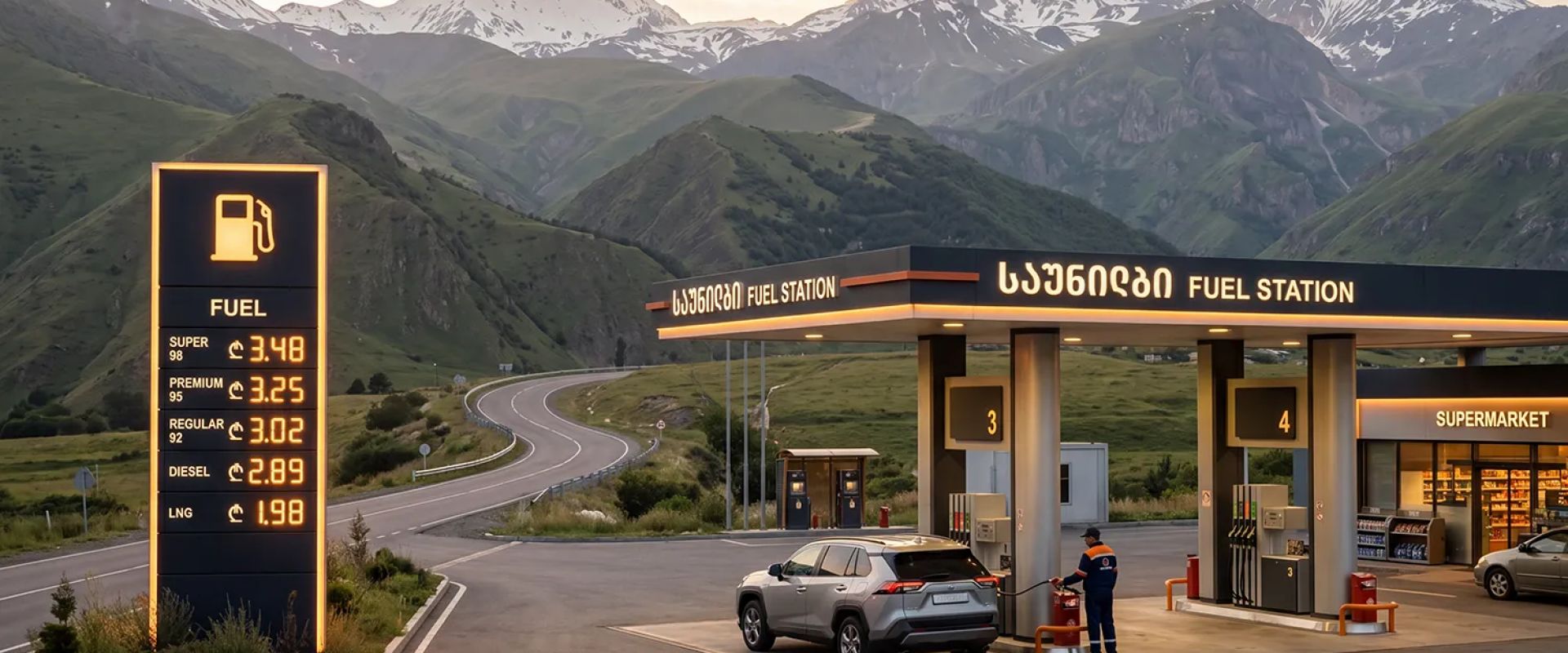
95-octane petrol costs around ₾4.28 per litre (~$1.64 / €1.47) as of October 2026, with diesel near ₾4.95/L (~$1.90) and LPG around ₾1.64/L.
Georgian stations sell the same European-grade fuels you'd expect: Regular 92, Premium 95, Super 98/100, Euro 5 diesel, and LPG, though each major chain brands them under its own marketing names.
A major price spike is happening due to the increased price of crude oil.
Five major fuel networks dominate the market: Wissol, Gulf, SOCAR, Rompetrol, and Lukoil, with price gaps between brands typically only ₾0.10–0.13 per litre.
Most stations are full-service and accept lari cash, local and foreign cards, and contactless payments, though some unattended pumps in some ares may reject cards - keep some cash as backup.
Current Petrol and Gas Prices in Georgia
Petrol prices in Georgia have risen in recent years. As of October 2026, 95-octane petrol costs ₾4.28 per litre ($1.64/€1.47). Diesel is slightly higher at ₾4.95 per litre ($1.90) . LPG (autogas) is much cheaper (₾1.64/L ($0.62).
Fuel prices may vary slightly between stations, but they generally align with the national average. It’s best to avoid unfamiliar or poorly maintained stations, as fuel quality can sometimes be inconsistent in Georgia. For a safer and more reliable experience, we recommend using well-known networks such as Gulf, Socar, Rompetrol, Wissol, and Lukoil.
Types of Fuel Available at Georgian Gas Stations
Stations in Georgia sell the same fuel grades found in Europe. The common fuel types are:
Regular (Euro Regular/92): A basic unleaded petrol around 92 octane. Price:₾4.02 per litre (about $1.54/€1.38)
Premium (Euro Premium/95): Standard 95-octane unleaded, often just called “95”. This is widely used in most cars with a price of ₾4.28 per litre ($1.64/€1.47)
Super (98) / Euro Super: High-octane 98 (or sometimes 100) petrol for performance engines. Often branded with names like “Super” or “Premium Super”. Average price is around: ₾4.62 per litre (about $1.77/€1.58)
Diesel (Euro Diesel): Euro 5-compliant diesel fuel (ultra-low sulfur). In practice stations sell one or two diesel grades, generally labeled “Diesel”. Price average is ₾4.95 per litre ($1.90)
LPG Propane (LPG) are available at many stations for vehicles converted to gas with a price of: ₾1.64/L ($0.62)
Each major brand uses its own names. For example, SOCAR calls them Nano Super, Nano Premium, and Euro 92, while Rompetrol sells “Efix” branded 95 and 98 alongside 92. All meet Georgian and EU standards. Diesel is usually sold only to comply with Euro 5 standards .
Want to know more about charging an electric vehicle in Georgia? Check out our article on using EV here.
A short description of the popular petrol station chains and their perks.
Wissol
170Stations
The largest chain in Georgia, Wissol provides extensive coverage with a focus on comprehensive rest-stop amenities.
Greek EKO Fuel
Smart Shops
Premium Cafes
Rewards Program
SOCAR
115+Stations
A dominant regional player offering proprietary fuel technology and modern retail convenience.
Nano Brand Additives
WayMart Stores
Energy Card Loyalty
Gulf
149Stations
A lot of stations on local routes with performance-oriented fuel selections.
G-Force Performance
Gulf Stores
Select EV Chargers
Rompetrol
81Stations
Not the biggest chain, usually offers slightly cheaper price than other brands.
Efix Products
Engine Protection
Lukoil
30Stations
Providing consistent, standardized fuels across key transit routes.
Euro-spec Reliability
Transit Focused
Other Brands and Current Prices
Other regional brands include Connect (P100), Portal (Georgia Gas), Neogas, and small independents. They have fewer stations and generally similar fuel quality.
Examples of current prices across brands: in early-July 2026, SOCAR Premium petrol was ₾4.26/L, Wissol Eco Premium ₾4.29, Gulf G-Force Premium ₾4.25, Rompetrol Efix 95 at ₾4.27, and Lukoil at ₾4.25. Diesel prices were in a similar range, about ₾4.9-4.95/L. Overall, differences between the big chains are usually only a few tetri per litre. Service quality is comparable: all are full-service stations with attendants, shops and cafes at many sites.
Price and Service Quality Comparison Between Retailers
Price differences between major brands are small. Gaps of around 0.1-0.13 ₾ per litre represent only a few percent difference. Because Georgia has no crude production, all retailers use imported fuels and face the same taxes, so quality is generally uniform. Drivers often choose a station based on convenience or loyalty perks rather than brand.
Quality of service varies slightly by company. Wissol and Gulf are known for modern facilities and shops, while some smaller stations may be more basic, even without toilets. All major chains emphasize Euro 5 fuel quality, and there are no widespread reports of substandard fuel in official outlets. In short, any top brand station such as SOCAR, Wissol, Gulf, Rompetrol, or Lukoil will provide reliable fuel.
Petrol Prices by Region in Georgia
Fuel prices are largely the same across Georgia’s cities, since taxes are nationwide and fuel is shipped by road.
Tbilisi: Being the capital, Tbilisi has many stations and often the lowest prices due to competition. Prices are essentially the national average, around ₾4.28 per litre ($1.64/€1.47) for 95 petrol in July 2026. Check multiple networks such as Wissol, SOCAR, and Gulf, as they can differ by a few tetri.
Tbilisi Airport: There are no fuel stations at Tbilisi Airport. It’s easier to stop at one of the fuel stations on the highway from the city. Prices are usually the same as at any other station.
Batumi and the Black Sea Coast: Competition among chains in Batumi tends to keep prices about the same or slightly below Tbilisi levels. There is no premium tax on coastal fuel, so expect similar price to Tbilisi.
Kutaisi, Gori and Other Cities: Kutaisi and other regional cities such as Zugdidi, Gori, and Rustavi see very similar prices, plus or minus a few tetri. Rural towns may have one or two stations, often independent, which can be a few tetri higher if far from wholesale suppliers.
Mountain and Rural Routes (Kazbegi, Svaneti, Tusheti): In highland areas, fuel stations are sparse. Major roads have fueling points in places like Mtskheta, Gudauri, and Stepantsminda. Very remote areas like Tusheti or Ushghuli effectively have no stations, so drivers must fill up before heading there. LPG and CNG are often unavailable in high mountain areas, so petrol or diesel must be used. In Tusheti there are some cafes that can sell a fuel to you, but expect a much higher price per liter than on official gas stations.
How Georgia’s Fuel Prices Compare to Neighboring Countries
Georgia vs Turkey: Turkish petrol is in a similar range. In October 2026, prices in Istanbul averaged about 85.6 Turkish Lira per litre, roughly $1.72/L.
Georgia vs Armenia: Armenia’s petrol is slightly more expensive. As of October 2026, 95-octane cost about 620 AMD per litre, or roughly $1.75. Georgia’s price is about 10% lower.
Georgia vs Azerbaijan: Azerbaijan’s prices are much lower. In October 2026, 95 petrol was around 1.60 AZN per litre, about $0.94/L, roughly half the price of Georgia’s.
Georgia vs EU Average: European fuel is much costlier. The EU average gasoline price was around €2.10/L in October 2026, while Georgia’s equivalent was about €1.47/L. Georgia’s petrol is often 35–40% cheaper than the EU average.
Overall, Georgia’s fuel is cheaper than in the EU and similar to or slightly cheaper than Turkey and Armenia, but more expensive than oil-producing Azerbaijan.
What Influences Gas Prices in Georgia
Several factors determine fuel prices in Georgia:
Global Oil Market (Brent Crude): Georgia imports all its fuel, so world oil prices are the main driver. When Brent crude rises, local pump prices follow.
Excise Tax and VAT: Georgia imposes both a fixed excise duty and 8% VAT on fuel. Together these taxes add a significant amount to each litre.
Exchange Rate of the Lari: Because fuel is imported and priced internationally in dollars, the GEL/USD rate matters. If the lari weakens, fuel becomes more expensive in local currency.
Seasonal Demand and Tourism Peaks: Demand rises in summer when tourism and travel increase, which can put upward pressure on prices.
In summary, global crude prices and taxes are the biggest factors, with exchange rates and seasonal demand also playing important roles.
How to Save Money on Fuel in Georgia
Analyse prices on the websites:Websites of major chains list current prices of fuel in the country.
Loyalty Programs and Discount Cards: Many stations have loyalty cards. For example, Wissol’s “My Circle” card can offer discounts of up to 25 tetri per litre.
Drive Efficiently: Avoid heavy acceleration and braking, keep tyres properly inflated, remove extra weight, and plan routes carefully.
Combining these strategies can reduce fuel spending significantly over a long trip.
Ready for your Georgian trip? Your Perfect Car Awaits.
We at OG Drive are a local service to rent a car in Tbilisi and Georgia, offering a wide range of vehicles, from city cars to AWD SUVs. Book online in minutes with transparent pricing, full insurance, and unlimited mileage. We offer free delivery to your hotel or airport and provide fast, personalized support.
Estimating Fuel Costs for Popular Road Trips in Georgia
Calculated at 7L/100KM
Baseline Assumption
Estimates are based on a standard crossover vehicle averaging 7 liters per 100km at current median prices.
Tbilisi → Batumi
Coast-to-Coast
Distance
370 km
Est. Cost
~₾ 84
Tbilisi → Kazbegi
Military Highway
Distance
150 km
Est. Cost
~₾ 36
Grand Tour
Full Country Loop
Distance
1000 km
Est. Cost
~₾ 236
Payment Methods at Georgian Gas Stations
Cash, Cards and Contactless: Most stations accept Georgian lari cash, credit cards, debit cards, and contactless payments. Smaller or remote stations may prefer cash.
Foreign Credit Cards: Large chains usually accept foreign cards, though some unattended pumps may not work with certain cards.
Self-Service vs Attended Pumps: Georgian stations are generally full-service. An attendant will usually fill your tank, and you pay afterward. At CNG stations, passengers may be asked to leave the vehicle during refueling.
Book your car with the best local car rental company now!
What is the current petrol price in Georgia (country) per litre?
As of early-July 2026, the petrol price in Georgia per litre is approximately ₾4.28 per litre ($1.64/€1.47) for 95-octane (Premium). Regular 92-octane sits around ₾4.02 per litre (about $1.54/€1.38), Super 98 averages ₾4.62 per litre (about $1.77/€1.58), diesel costs roughly ₾4.95 per litre ($1.90) , and LPG autogas is much cheaper at around ₾1.64/L ($0.62).
Are Georgian gas stations self-service or full-service?
Almost all stations in Georgia are full-service. An attendant fills your tank, and you pay afterwards inside the shop or at the pump. At CNG (compressed natural gas) stations, passengers may be asked to step out of the vehicle during refueling for safety reasons.
Are there 24/7 gas stations in Georgia?
Most petrol stations are open 24 hours, especially in Tbilisi and on major routes, but some stations outside big towns can close in the evening.
Are there gas stations on remote routes like Kazbegi, Svaneti, or Tusheti?
Major mountain roads have stations in Mtskheta, Gudauri, and Stepantsminda, but very remote areas like Tusheti effectively have no official gas stations. Drivers should fill up before heading there. Some local cafes in Tusheti may sell fuel informally, but at a significant markup compared to highway prices.
Can I pay with a foreign credit card at gas stations in Georgia?
Yes. Most major chains (Wissol, SOCAR, Gulf, Rompetrol, Lukoil) accept Visa, Mastercard, and contactless payments, including foreign-issued cards. Some unattended pumps in remote areas may reject foreign cards, so it's wise to carry Georgian lari cash as a backup.
How much does it cost to drive from Tbilisi to Batumi on petrol?
Based on a typical crossover averaging 7L/100km, the 370 km Tbilisi–Batumi route costs roughly ₾84 in petrol at current prices. A shorter trip from Tbilisi to Kazbegi (150 km) costs about ₾36, while a full 1,000 km country loop runs around ₾236.
Is the fuel quality reliable at Georgian petrol stations?
Fuel quality at the five major chains (Wissol, SOCAR, Gulf, Rompetrol, Lukoil) is consistent and meets Euro 5 standards. There are no widespread reports of substandard fuel from these brands. However, unfamiliar independent stations in rural areas can occasionally have inconsistent quality, so sticking to recognised networks is recommended.
What is the petrol price in Georgia, Tbilisi?
Petrol prices in Tbilisi are essentially the same as the national average. Because the capital has the highest concentration of stations, competition between brands like Wissol, SOCAR, Gulf, Rompetrol, and Lukoil sometimes nudges Tbilisi prices a few tetri lower than rural areas.
What type of fuel should I use for my rental car?
Use the octane rating your car requires. Most rental cars in Georgia require 95-octane unleaded. Only use diesel in diesel vehicles, and use LPG/CNG only if the car is designed or converted for it.
What types of fuel are sold at Georgian petrol stations?
Georgian stations sell European-grade fuels: Regular 92, Premium 95, Super 98 (sometimes 100), Euro 5 diesel, and LPG autogas. Each major brand uses its own marketing names — for example, SOCAR sells Nano Premium and Nano Super, while Rompetrol brands its 95 and 98 grades as "Efix."
Which gas station has the cheapest petrol in Georgia?
Differences between major chains are usually only ₾0.10–0.13 per litre. In early-May 2026, Lukoil (₾3.52) and SOCAR (₾3.55) tended to be slightly cheaper than Gulf (₾3.69) for Premium 95. For the lowest effective price, sign up for loyalty programs such as Wissol's "My Circle" card, which can offer up to 25 tetri off per litre.
Why is fuel expensive in Georgia compared to neighboring oil producers?
Georgia produces no crude oil, so all fuel is imported. The final pump price reflects global Brent crude prices, an excise duty plus 8% VAT, the GEL/USD exchange rate, and seasonal tourism demand. This is why Georgia's petrol is cheaper than the EU average (~€1.92/L) but noticeably pricier than oil-rich Azerbaijan (~$0.72/L).